
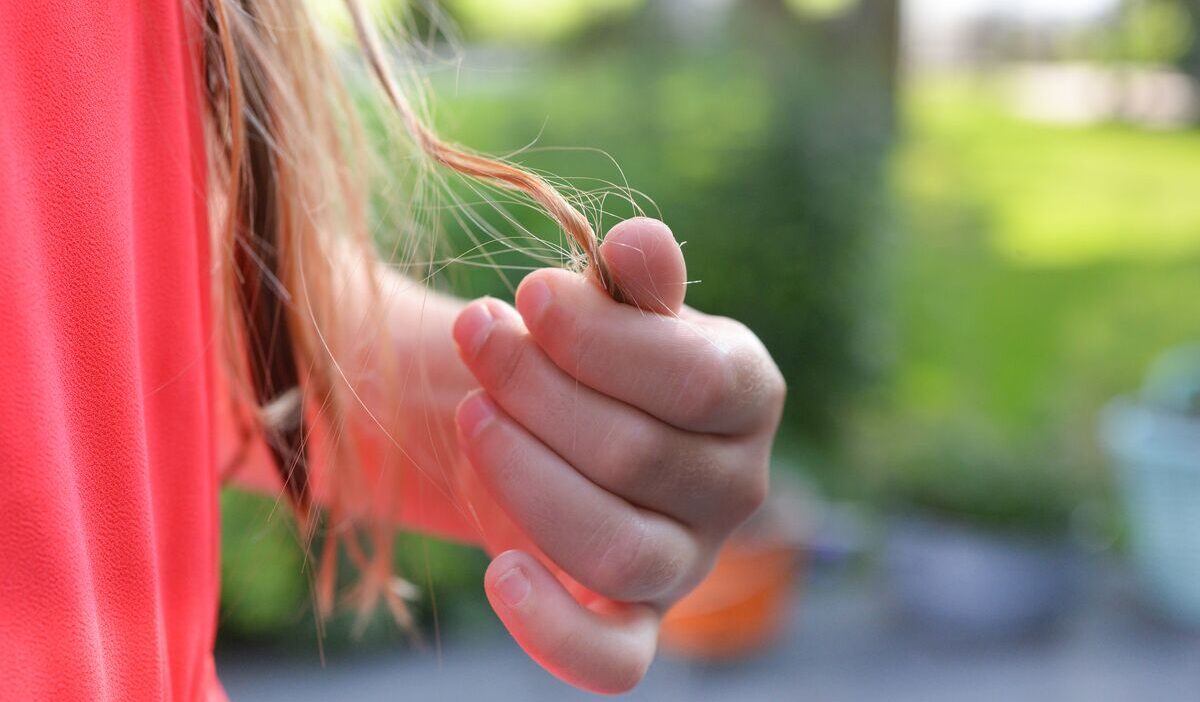
Split ends usually start at the oldest, most weathered part of the hair: the tips. Once that happens, the damaged end can continue fraying farther up the strand if it is repeatedly stressed.
That is why how to get rid of split ends is less about searching for a miracle serum and more about deciding what can still be protected and what already needs to be trimmed.
1. Can Hair Products Permanently Repair Split Ends?
No product can permanently fuse a split hair fiber back into its original structure.
Conditioners, silicone-based serums, oils, and leave-in products can coat the shaft, reduce friction, and make damaged ends look smoother. They may also temporarily hold separated fibers together and reduce further snagging.
However, the visible hair shaft is made of nonliving keratinized cells, so once the fiber has physically split, it cannot biologically rebuild itself.
Some newer cosmetic formulas use proteins, polymers, or bonding agents to improve tensile strength and surface smoothness. These effects can be useful, especially for chemically treated hair, but they are still cosmetic or structural reinforcement rather than permanent biological repair.
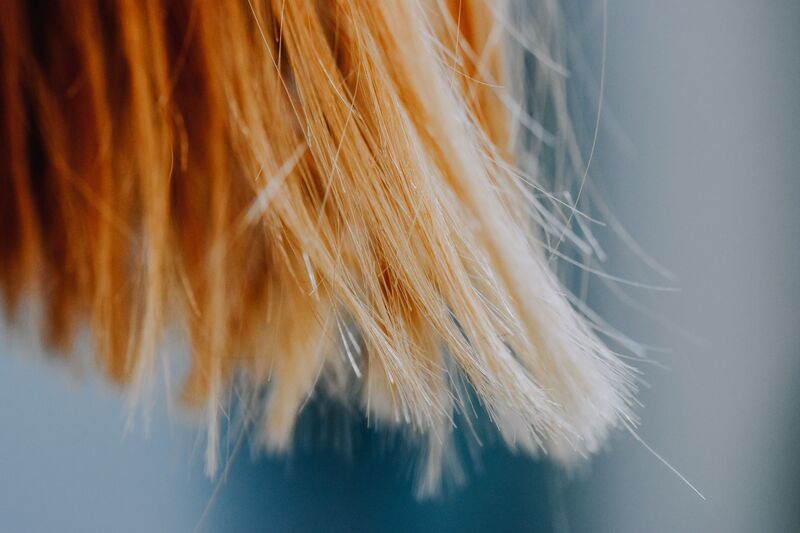
2. How to Get Rid of Split Ends?
The only reliable way to remove an existing split end is to cut above the damaged section.
You do not always need a dramatic haircut. If the splitting is limited to the last small portion of the hair, a light trim may be enough.
When the damage extends several inches upward or affects many strands, a more substantial trim can prevent continued breakage and give the remaining hair a cleaner edge.
>>> Read more: How Long Does Cologne Last? On Your Skin vs In the Bottle
3. What Daily Styling Habits Wear Down Hair Ends?
Hair ends are especially vulnerable because they are older than the hair near the scalp and have been exposed to more washing, brushing, sunlight, heat, and friction. Common habits that increase splitting include:
- Frequent flat-ironing or curling
- Blow-drying at high heat
- Repeated bleaching or coloring
- Rough towel drying
- Brushing wet hair aggressively
- Tight hairstyles
- Backcombing or teasing
- Sleeping with wet hair
- Excessive manipulation of dry curls
- Repeated sun or chlorine exposure
The cuticle protects the inner cortex, but repeated weathering can crack, lift, or remove cuticle cells. Once that outer layer becomes damaged, the underlying fiber becomes more vulnerable to splitting and fracture.
Heat deserves particular attention. Dermatology guidance recommends using flat irons only on dry hair and choosing low or medium heat rather than the highest setting. Reducing how often heat tools are used also lowers cumulative damage.
4. How to Prevent Future Split Ends During Hair Growth?
Prevention is mainly about reducing friction, heat, and chemical stress while keeping the hair adequately conditioned.
Start with washing habits. Apply shampoo mainly to the scalp and let the lather rinse through the lengths rather than scrubbing the ends directly. Condition after washing to improve slip and reduce tangling. After washing:
- Blot or wrap the hair gently instead of rubbing it.
- Use a wide-tooth comb when detangling.
- Start at the ends and work upward.
- Apply leave-in conditioner if the ends feel dry.
- Use heat protectant before blow-drying or ironing.
- Keep hot tools on lower settings.
- Trim visibly split ends before they travel farther.
For curly or coily hair, extra conditioning may be especially helpful because these hair types tend to be drier and more prone to friction-related breakage.
A light oil or serum on the ends can also reduce friction between strands. This does not repair splits, but it can help slow new damage.
>>> Read more: How Long Does a Silk Press Last? What to Expect on Natural and 4C Hair
5. FAQs
Clear up common myths around how to get rid of split ends with these quick, expert-backed answers to frequent hair care queries.
How Do Split Ends Differ From Single-Strand Hair Knots?
A split end occurs when the end of a hair shaft separates into two or more branches. A single-strand knot, also called trichonodosis, forms when one strand loops and ties around itself.
Does Trimming Hair Regularly Accelerate Natural Follicle Growth?
No. Cutting the hair shaft does not change what happens inside the follicle beneath the scalp. Hair commonly grows around 1 centimeter per month, although individual rates vary.
What Role Does Daily Nutrition Play in Hair Tip Splitting?
Nutrition affects the quality of new hair produced by the follicle, but it cannot repair ends that are already split. Deficiencies in nutrients such as protein, iron, zinc, or certain vitamins can contribute to poor hair quality or hair loss in some people, but routine supplementation is not automatically helpful when no deficiency exists.
Is Trimming Split Ends at Home as Safe as Professional Stylist Cuts?
It can be safe for minor maintenance if you can clearly see the damaged ends and use sharp scissors designed for cutting hair. Avoid household scissors, which may crush or fray the fiber instead of producing a clean edge.
6. Final Thoughts
Split ends are easiest to manage before they spread farther up the hair shaft. Products can smooth, coat, and protect damaged ends, but they cannot permanently rebuild a fiber that has already split.
So, how to get rid of split ends? Over time, it becomes less about repeatedly cutting damaged hair and more about reducing the damage that creates those splits in the first place.