
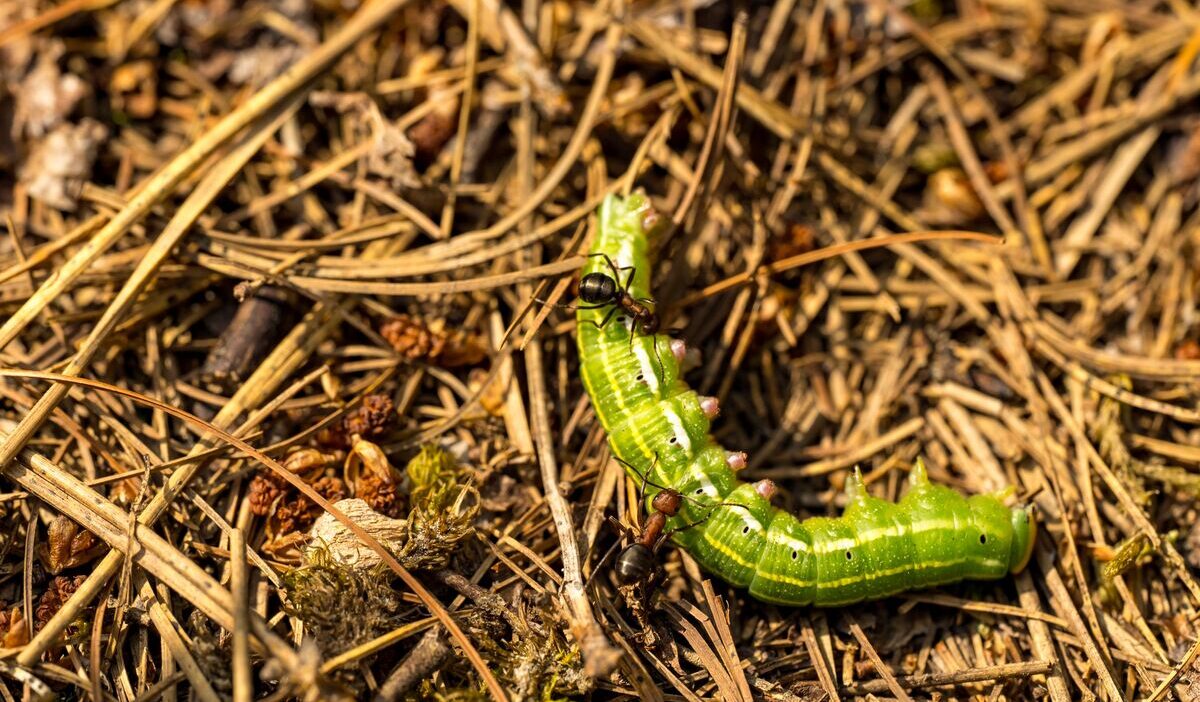
A lawn that looked fine yesterday can turn brown almost overnight once army worms move in. Knowing how to get rid of army worms starts with understanding why the damage happens so fast in the first place.
1. Why Army Worms Do the Most Damage in a Narrow Window?
Army worm moths lay egg masses of several hundred eggs at a time, and the larvae that hatch go through multiple growth stages before pupating. Each stage eats more than the one before it, but the difference isn’t gradual.
The final stage of larval growth eats far more than every earlier stage combined, which is why a lawn can look untouched one day and stripped bare within 24 to 48 hours.
Treating a lawn while the caterpillars are still small removes them before they reach the stage where they cause the most visible destruction.
Waiting even a few days can mean the difference between a light patch of damage and a section of lawn that needs to be reseeded.
2. How to Get Rid of Army Worms While They’re Still Small?
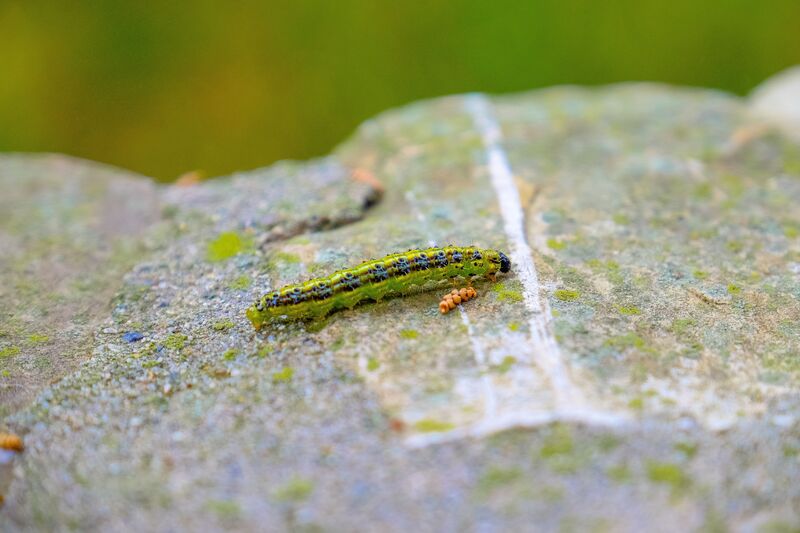
The most effective approach depends almost entirely on catching them early, while they’re still small and greenish rather than fully grown.
- Scout the lawn regularly during late summer and early fall, checking grass blades and soil for small caterpillars or chewed, window-paned leaves.
- Mow the lawn before treatment so insecticide reaches the soil surface where larvae are active.
- Water lightly a few hours before applying treatment, since this brings larvae up toward the surface.
- Apply insecticide early or late in the day, when army worms are most active and most likely to make contact.
- Choose a product labeled for armyworm or caterpillar control, and consider a different active ingredient if a first treatment doesn’t show results within a few days.
Small armyworms are noticeably easier to control than caterpillars nearing their full length, so treating early isn’t just convenient. It’s the step that determines whether the rest of this process stays simple.
>>> Read more: How to Get Rid of Carpenter Bees Without Worsening the Problem
3. What Steps Handle Extensive Army Worm Damage?
Once army worms have reached their final growth stage or the damage already covers a large section of lawn, the approach shifts from prevention to damage control.
Insecticide can still reduce the current population, but it won’t undo the grass that’s already been eaten.
At this stage, evaluate how much of the lawn is affected, how large the caterpillars have become, and how close the season is to the first frost, since that timing affects whether reseeding or full recovery is realistic this year.
Spot treating heavily infested areas, rather than the entire lawn, often makes more sense once damage is already visible and spreading unevenly.
4. How to Help Damaged Lawns Recover?
Healthy turfgrass can often tolerate low to moderate damage and bounce back on its own with the right care.
Watering consistently and applying a light fertilizer application supports new growth in areas that were fed on but not completely destroyed.
Bare patches where the grass was eaten down to the soil usually need reseeding or new sod, since there’s no existing turf left to recover.
Keeping the lawn watered and mowed at a proper height afterward helps new grass establish before the next generation of army worms has a chance to arrive.
>>> Read more: How to Get Rid of Moles in Your Yard: Target Active Tunnels & Fix Lawn Damage
5. FAQs
Timing is critical when figuring out how to get rid of army worms before they ruin your turf. Here are direct answers to the top questions homeowners ask when protecting their lawns.
How fast can grass turf recover after an army worm infestation?
It depends on how much of the grass was eaten versus just damaged. Turf that still has healthy roots can green back up within a few weeks of consistent watering and fertilization, while bare patches stripped to the soil typically require reseeding rather than natural recovery.
How does army worm damage differ from grub or chinch bug damage?
Army worm damage tends to spread quickly and follows a visible feeding pattern, often with a sharp line between healthy and damaged grass.
Are natural predators like birds effective for army worm control?
Birds can reduce populations somewhat, especially when large numbers of caterpillars are exposed on the surface, but they rarely provide enough control on their own during a heavy outbreak.
What weather conditions trigger sudden army worm outbreaks?
Fall armyworms migrate from warmer regions and tend to arrive in large numbers during late summer and early fall, with activity building further after warm, humid stretches that favor moth flight and egg-laying.
6. Final Thoughts
Getting ahead of army worms comes down to timing more than any single product.
Scouting early and learning how to get rid of army worms while they’re still small prevents the kind of damage that takes weeks to recover from, while a lawn that’s already been hit hard needs a different plan built around watering, reseeding, and patience rather than repeated treatment.