
A sudden cloud of winged insects near a window or porch light can feel like an invasion. This guide explains how to get rid of flying ants by confirming what they are, finding the nest behind them, and making your home less inviting for the next swarm.
1. Are They Flying Ants or Termites?
Check this first, because termites call for a very different response, and the right plan depends on the answer. Catch a couple of the winged insects and compare three traits.
- Waist: Ants have a narrow, pinched waist. Termites have a thick, straight body with no obvious waist.
- Antennae: Ant antennae are bent, like an elbow. Termite antennae are straight and beaded.
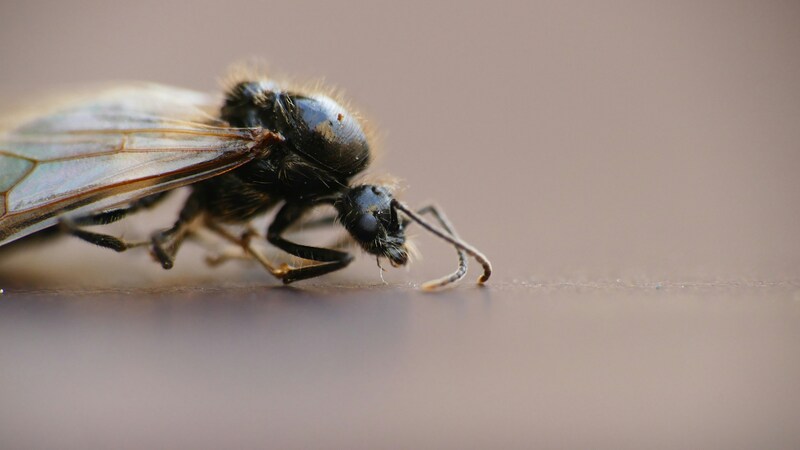
- Wings: Ant front wings are larger than the hind wings, while termite wings are all about the same size. Termite wings also have many veins and can look milky, while ant wings are mostly clear.
If you think you have termites, or you find clay-like tubes from the soil to the wood, contact a pest professional as soon as possible.
Ants do not eat wood, so ants alone are usually less urgent. Check the area for darkened or blistered wood, which points to termites.
2. What the Swarm Location Tells You About the Nest
Flying ants are winged males and queens leaving a mature colony to mate and start new ones. Where you see them gives clues about where the colony lives.
- Inside the house, in large numbers: Many winged ants at windows suggest a nest in the building. One or a few usually just wandered in.
- Near the foundation or patio: Most ants nest in soil, often along foundation walls or under slabs, so a swarm there points to a ground nest.
- Near trees, stumps, or woodpiles: Carpenter ants nest in dead or hollow wood, and an indoor nest is often a satellite of a larger parent colony outside.
3. How to Get Rid of Flying Ants?
Winged ants are only the visible part of the colony. Removing them without dealing with the nest means more will show up next spring or summer.
Clear Flying Ants Indoors
Start by removing what you can see, then hunt for the source. A vacuum is a simple tool for sweeping up the winged ants themselves.
- Vacuum swarmers, empty the bag or canister outside, and wipe window sills.
- Follow worker trails after dark to find where they enter or nest.
- Fix leaks and dry out damp wood, since many nests start where moisture has softened it.
- Use bait only when you can place it where workers travel, and never spray near it.
Reduce Flying Ants Outdoors
Next, make the yard and exterior less attractive to nesting colonies, which is the long-term half of how to get rid of flying ants.
Trim tree branches and shrubs so they do not touch the house, and keep utility line openings sealed.
Store firewood off the ground and away from walls, remove old stumps and logs near the building, and keep mulch no more than 2 to 3 inches deep around the perimeter.
>>> Read more: How to Get Rid of Fungus Gnats in Your Home and Houseplants
4. How Do Flying Ants Get Inside Houses?
Most winged ants arrive from outdoors, looking for a place to start a nest or for moisture. They slip through the same gaps that regular ants use, so a few of the right repairs close most doors.
- Gaps around doors and windows: Worn weatherstripping and small cracks are easy entry points.
- Branches and wires: Limbs touching the roof and utility lines give ants a bridge.
- Pipes and vents: Holes where pipes and wires enter the house often stay unsealed.
- Damp or decayed wood: Leaks and clogged gutters can attract ants looking for a nest site.
5. Do Flying Ants Mean House Damage?
Not by themselves. Flying ants are a sign of a mature colony, not a measure of damage. Most ant species do not harm wood, but carpenter ants dig smooth tunnels in it.
They excavate wood rather than eat it, and damage is usually slow, often taking years, though a large colony can weaken structural lumber. Look for these signs of a nest in your home:
- Coarse, fibrous sawdust or frass near cracks or baseboards.
- Faint rustling inside walls or woodwork.
- Many winged ants at indoor windows.
- Damp, soft, or hollowed wood.
>>> Read more: How to Get Rid of Gnats in Plants and Prevent the Reinfestation
6. FAQs
Browse our frequently asked questions below for fast, practical guidance on how to get rid of flying ants before they turn into a bigger structural issue.
Do flying ants bite or sting?
Carpenter ants cannot sting, but they can bite painfully with their jaws. Winged ants indoors are rarely aggressive. If you are bitten or are not sure what you have, bring a specimen to your local extension office for identification.
How long does a swarm usually last?
A mating flight is brief, and males die within a couple of days. Colonies release winged ants on warm days in spring and early summer, so you may see them more than once.
Why do flying ants appear after rain?
Swarms are often triggered by calm, sunny weather a few days after heavy rain. Some carpenter ants swarm in the late afternoon after rain, so a wet spell can be followed by a sudden burst of winged ants.
7. Final Thoughts
Winged ants signal a mature colony nearby, so, how to get rid of flying ants? It depends on finding the nest, not just clearing the swarm.
Vacuum what you see, fix the moisture and entry points, and trim back anything that touches the house. If you suspect termites, or the nest is inside your walls, call a pest professional.