
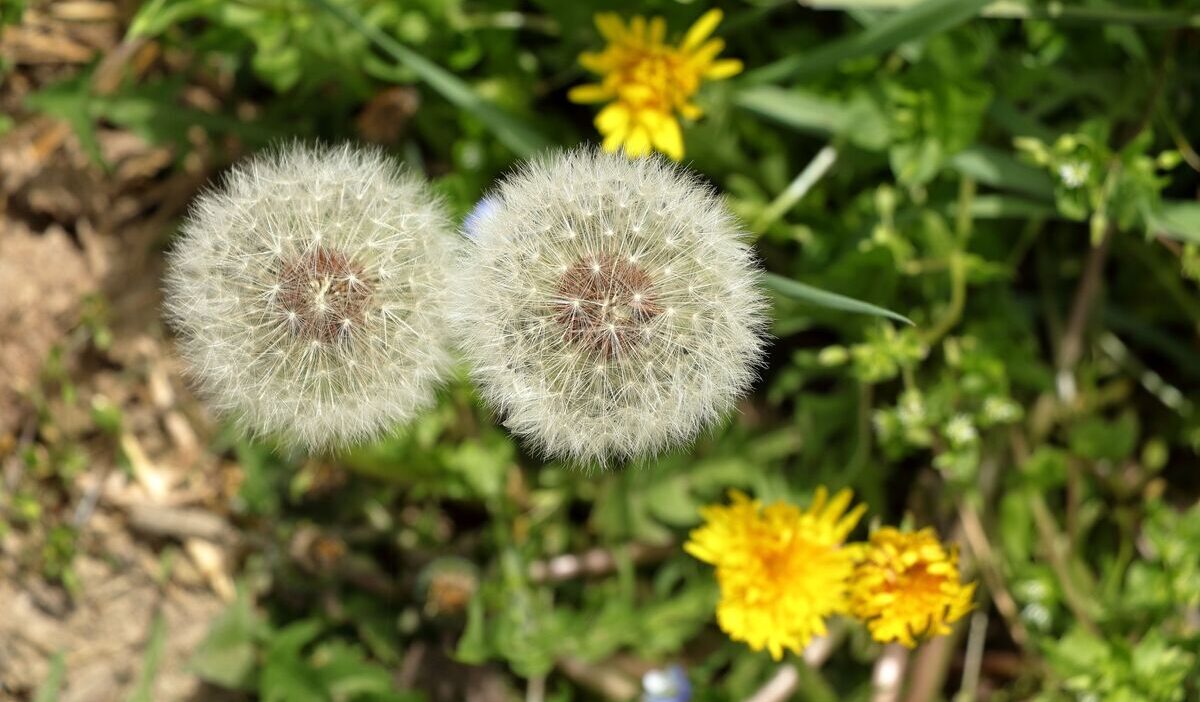
Dandelions rarely stay limited to one yellow flower. Their deep taproots allow established plants to return after incomplete removal, while wind-blown seeds can quickly colonize thin areas of turf. One plant may produce thousands of seeds, so a few overlooked weeds can become a much larger lawn problem over time.
That’s why how to get rid of dandelions depends on timing as much as the control method itself. Young plants can often be removed manually, while established patches may need selective herbicide treatment combined with lawn care that reduces open space for new seedlings.
1. Why Does Hand-Pulling Dandelions Fail?
Dandelions are perennial weeds with deep fleshy taproots. If the plant is pulled from the top and part of the root remains underground, new growth can develop from the surviving root section.
2. When to Treat Dandelions in Spring?
Spring is a useful time to deal with new or visible dandelions before they produce mature seed heads.
Plants are actively growing during this period, which makes young weeds easier to dig and allows post-emergent herbicides to work when needed.
Early spring or late summer into early fall are considered good treatment windows when dandelions are actively growing. Spring treatment is especially useful when:
- Only a few plants are present
- Plants are young and easy to dig
- Flower buds have formed but seed heads have not
- You want to reduce seed production immediately

3. How to Get Rid of Dandelions by Hand?
Manual removal works best for isolated plants and small patches.
Wait until the soil is moist after rainfall or watering. Moist soil releases the taproot more easily and reduces the chance that it will snap during removal.
Use a dandelion fork, narrow weeding knife, or another deep-rooted weeding tool. Insert it alongside the taproot rather than directly through the center of the plant.
If flowers or seed heads are already present, collect them instead of leaving them on the lawn.
>>> Read more: How to Get Rid of Carpenter Bees Without Worsening the Problem
4. When Are Herbicide Treatments Effective?
Selective post-emergent broadleaf herbicides can be useful when dandelions are too numerous for hand digging.
Products containing active ingredients such as 2,4-D, MCPP (mecoprop), dicamba, or triclopyr may control dandelions without killing compatible lawn grasses when used according to the label.
- Spring: Treatments can work when plants are actively growing, particularly before extensive seed production.
- Late summer and fall: This is generally the preferred period for established perennial dandelions because the plants are moving nutrients into their roots. Systemic herbicides can move with those carbohydrates and reach the taproot more effectively.
Spot-treat individual weeds rather than broadcasting herbicide over healthy turf when practical. Herbicides should also be treated as a supplement to proper lawn management rather than a substitute for it.
Never assume more herbicide means better control. Follow the label for turf compatibility, temperature, rainfall restrictions, mowing intervals, and nearby ornamental plants.
5. Does a Thick Lawn Prevent Dandelions?
Dense turf is one of the best long-term defenses against dandelion establishment.
Dandelions readily colonize thin lawns and exposed soil, while healthy grass competes for light, water, nutrients, and physical growing space.
Mowing too low can weaken grass and create more opportunities for weeds. For many turf species, a mowing height of about 2.5–3 inches supports stronger turf and reduces weed invasion.
Mowing below 2 inches can reduce drought and heat tolerance while increasing weed problems. To keep the lawn competitive:
- Mow at the proper height for the grass species
- Avoid removing more than one-third of the blade at one mowing
- Overseed thin areas
- Correct soil compaction
- Water appropriately
- Fertilize based on turf needs rather than excessive spring feeding
>>> Read more: How to Get Rid of Crabgrass Without Damaging the Rest of Your Lawn
6. FAQs
Dandelions are tough perennials, but knowing how to get rid of dandelions naturally can protect your soil and pets. Follow these proven DIY tips to reclaim your yard safely.
Are Dandelions Actually Bad for the Lawn?
Not necessarily in small numbers. Dandelions can provide early-season flowers for pollinators and their deep roots can grow through compacted soil. However, large populations compete with turf and create bare spaces when removed.
Can I Compost Pulled Dandelions Safely?
Yes, if the plants have not produced mature seed heads and the compost system becomes hot enough to destroy viable plant material. If fluffy seed heads are already present, it is safer to remove them from ordinary cold compost piles.
Do Dandelions Come Back Every Year From the Same Root?
Yes. Dandelions are perennial plants. Their taproots survive winter and produce new leaves and flowers during the following growing season.
A broken root can also regenerate, which explains why incomplete hand-pulling often results in another plant appearing in the same spot.
Is It Worth Treating Dandelions Before They Flower?
Yes, particularly if the goal is to limit seed production. A single plant can produce up to 15,000 seeds, and those seeds can spread by wind into thin areas across the lawn.
7. Final Thoughts
Dandelion control becomes much harder once mature plants and exposed soil are both widespread across the lawn.
Just as important, repair thin turf after removal. Proper mowing height, overseeding, irrigation, and soil management reduce the open spaces where new dandelion seeds can establish.
That combination makes how to get rid of dandelions a lawn-management process rather than an endless cycle of pulling the same plants every year.