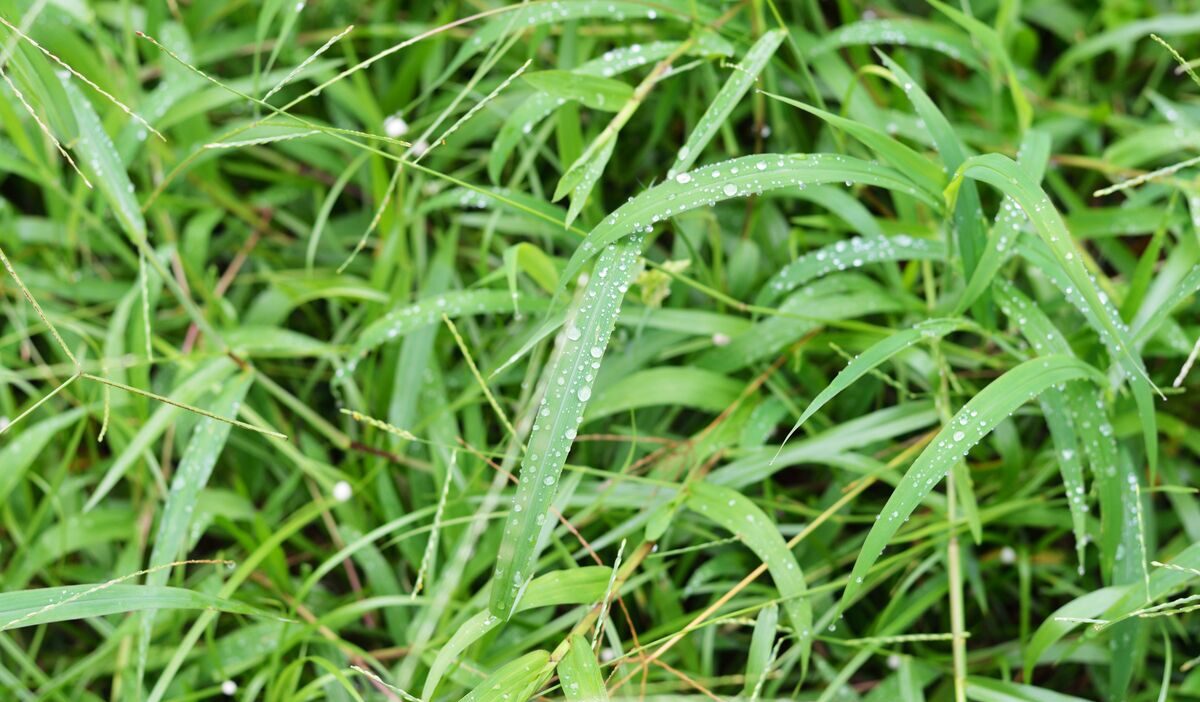
Crabgrass is a summer annual grass that spreads quickly through thin or stressed turf. It grows low to the ground, forms spreading stems, and produces seed before dying after the first hard frost.
The challenge is that aggressive treatment can also injure desirable lawn grass if the wrong product or timing is used.
The safest approach to how to get rid of crabgrass is to identify it correctly, remove or selectively treat existing plants, repair the bare areas they leave behind, and then prevent new seedlings the following spring.
1. How Do You Identify True Crabgrass Before Treating It?
Crabgrass often looks lighter green and coarser than surrounding turf. Large crabgrass has a spreading growth habit, swollen stem nodes, and hairy leaf blades. Lower stems can root where they touch the soil, allowing one plant to expand into a broad patch.
Crabgrass is an annual, so existing plants die after frost. That does not mean the problem disappears, however, because mature plants may leave large amounts of seed behind for future seasons.
2. How to Get Rid of Crabgrass?
Existing crabgrass is easiest to control while plants are still small. Once plants become large, heavily branched, and seed-producing, removal becomes more difficult and post-emergent herbicides may be less reliable.
Pull Small Crabgrass Plants
Hand-pulling works well for isolated young plants. Water the area lightly first if the soil is dry, then grasp the crabgrass near its base and remove as much of the fibrous root system as possible.
Because spreading stems may root at their nodes, check for attached sections before moving on. Fill the small opening with soil and encourage surrounding turf to close the gap.
For how to get rid of crabgrass in a lawn with only a handful of plants, hand removal is often safer than applying herbicide across the entire yard.
Use a Post-Emergent Herbicide
When crabgrass is too widespread for hand-pulling, a selective post-emergent herbicide may be appropriate.
Active ingredients such as Quinclorac and Fenoxaprop-P-ethyl are used for post-emergent crabgrass control in certain turfgrasses. Young, actively growing plants are generally easier to control than mature ones.
Always verify that the product is labeled for your lawn species. Some herbicides safe for one turf type can injure another.
Deal With Mature Crabgrass
Late-season crabgrass can be difficult to kill completely with post-emergent treatment.
If only a few large plants remain, pulling them before seed matures may be the simplest approach.
Where infestation is extensive, it may be more practical to tolerate the remaining plants until frost kills them and focus on preventing germination the following spring.
This seasonal strategy is often an important part of how to get rid of crabgrass without repeatedly stressing the desirable lawn.
3. How Do You Fix Bare Spots Left Behind After Crabgrass Dies?
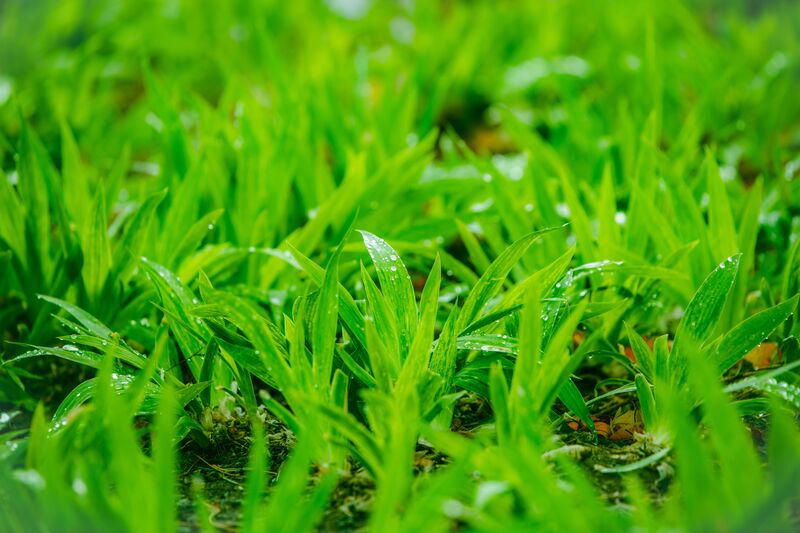
Removing crabgrass often exposes the original reason it became established: thin turf and bare soil.
Rake away dead material, loosen the soil lightly, and reseed with a grass variety suited to your climate and site conditions.
Fall is generally a better renovation period for cool-season lawns because temperatures are milder and weed competition is lower than during spring establishment.
Avoid leaving large bare patches through winter because crabgrass and other weeds readily occupy open soil the following year.
When new grass is established, follow the one-third mowing rule: if the target mowing height is 3 inches, begin mowing before the grass grows much beyond 4 inches.
Repairing these spaces is essential to how to get rid of crabgrass long term because dense turf competes with new seedlings.
>>> Read more: Carpenter Bees Damaging Wood? How to Get Rid of Carpenter Bees Without Worsening the Problem
4. Stop Next Year’s Crabgrass Before It Germinates
Pre-emergent herbicides are generally more reliable for crabgrass than trying to kill mature plants later.
Apply Pre-Emergent at the Right Time
Crabgrass begins germinating when the upper inch of soil reaches approximately 55–58°F at daybreak for 4–5 consecutive days, provided adequate moisture is present.
Another practical threshold is sustained soil temperatures around 53–55°F for about five days.
For best results, apply the pre-emergent roughly 10–14 days before expected germination.
Do not rely solely on calendar dates because soil temperatures vary by region and year.
Do Not Disturb the Barrier Unnecessarily
After application, pre-emergent products usually need rainfall or irrigation to move into the upper soil layer.
Some products should be watered in within 2–3 days, while other labels may specify a particular amount of irrigation.
Avoid dethatching afterward because aggressive soil disturbance can break the herbicide barrier. Conventional core aeration may be compatible with some applications, but label directions should always take priority.
Coordinate Pre-Emergent With Seeding
Pre-emergent herbicides can also interfere with desirable grass seed.
Depending on the product, the required waiting period before seeding may range from roughly 2–4 months.
If major spring reseeding is needed, a standard crabgrass preventer may interfere with turf establishment.
Always check the product label before combining overseeding and pre-emergent treatment.
5. What Lawn Care Habits Stop Crabgrass From Taking Over?
Crabgrass thrives where desirable turf is thin and sunlight reaches the soil surface.
Maintaining a taller, denser lawn shades the soil and makes conditions less favorable for weed seedlings. For many cool-season lawns, mowing at roughly 2.5–3 inches or higher can reduce crabgrass pressure.
A dense lawn does not guarantee zero crabgrass, but it makes how to get rid of crabgrass much easier by reducing the number of open sites where seeds can germinate.
6. How Do You Build a Year-Round Seasonal Crabgrass Control Plan?
Crabgrass management is easier when each season has a specific purpose.
Early Spring
Monitor soil temperature and apply pre-emergent before crabgrass germination begins.
The critical range is around 55°F, sustained for several days. Water the product in according to label directions and avoid disturbing the treated soil unnecessarily.
Late Spring and Summer
Watch for young seedlings that escaped the pre-emergent barrier.
Pull isolated plants or spot-treat young crabgrass with a selective post-emergent product. Maintain mowing height at approximately 3 inches or more where suitable for the turf species to increase shade at the soil surface.
Late Summer and Fall
Remove mature crabgrass before it drops additional seed when practical.
After frost kills remaining plants, repair thin or bare areas with seed. Late summer to early fall is an especially useful renovation period for many cool-season lawns.
Winter
Crabgrass itself is dead, but the seeds remain. Use winter to evaluate where the lawn was weakest and plan spring pre-emergent timing, mowing adjustments, drainage improvements, or fall renovation for the following season.
>>> Read more: How to Get Rid of Moles and Protect Your Lawn and Yard
7. Final Thoughts
The most effective answer to how to get rid of crabgrass is to combine removal of existing plants with prevention of the next generation.
Pull small patches, spot-treat young actively growing plants when necessary, and avoid aggressively treating mature crabgrass if frost is already approaching. Repair the bare soil left behind so desirable turf can reclaim the area.