

Soft, drooping skin along the lower face can make a once-sharp jawline look blurred. This guide explains how to get rid of jowls as far as home care and clinic treatments realistically allow, and what to avoid along the way.
1. What Causes Sagging Jowls Around the Jawline?
Jowls form when the structures that hold the lower face in place weaken. Knowing the cause helps you choose a sensible fix and set realistic expectations.
- Collagen and fat loss: With age, skin becomes less elastic and drier, with less collagen and fat in the deeper layers. In one CT study, total facial fat dropped by about 12% over roughly a decade, and uneven loss may explain heavier-looking jowls.
- Sun damage: UV light breaks down the collagen and elastin that keep skin firm.
- Smoking and pollution: Both speed up skin aging.
- Repeated expressions: Squinting, smiling, and frowning gradually reduce how well skin bounces back.
- Fast weight loss: Dropping weight quickly removes facial fat and lowers collagen and elastin, which can leave loose skin on the cheeks, jaw, and neck.
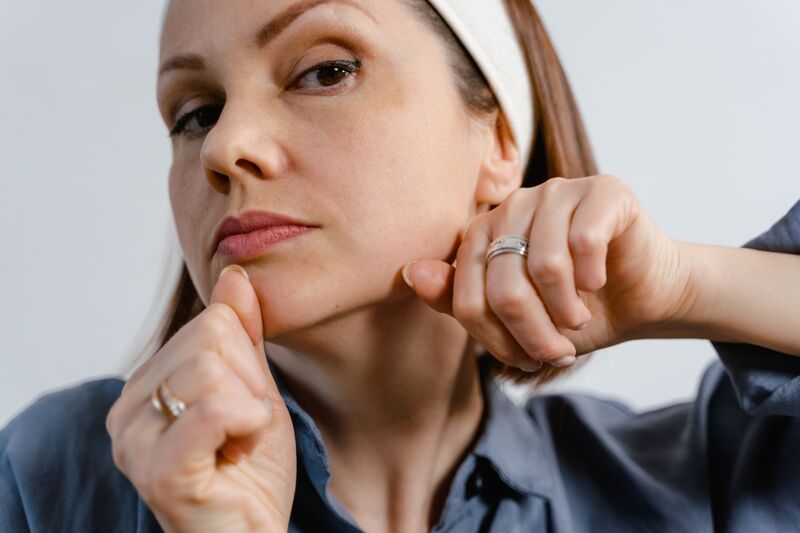
2. How to Get Rid of Jowls at Home?
Home care works best on mild sagging, and its effects are modest. Here is how to get rid of jowls or at least soften them with three habits you can start this week, from skin-level care to muscle work.
Method 1: Apply Firming Retinol Creams
Retinol is the most studied cream ingredient for aging skin. It boosts collagen production, which can make fine lines less noticeable, though dermatologists say creams cannot lift sagging skin and results are subtle at best.
- Patch test on a small area first.
- Use a pea-sized amount at bedtime on clean, dry skin, avoiding the eyes, nose, and mouth.
- Start every other day for the first couple of weeks, then increase as your skin allows.
- Finish with a moisturizer, and wear SPF 30 or higher every morning.
Method 2: Perform Daily Massage With Gua Sha
Next, add a gentle massage. Gua sha is a tool-assisted technique that can raise blood flow in the treated area, but there is not enough high-quality research to prove it tightens the jawline.
Apply a serum for glide, then sweep from the center of the face outward in one direction with light pressure. A little redness is normal, but it should never hurt.
Avoid it on sunburned, irritated, or swollen skin, and talk to a doctor first if you take blood thinners or have a circulation problem.
Method 3: Do Facial Muscle Toning Exercises
Finally, train the muscles under the skin. In a small Northwestern study, 16 women aged 40 to 65 who completed a 20-week routine of 30-minute sessions showed improved upper and lower cheek fullness.
The study measured cheek fullness, not jowls directly, and a consistent routine matters more than long, occasional sessions.
3. Which Non-Surgical Treatments Lift Loose Skin?
When home care is not enough, clinic procedures can go deeper. The American Academy of Dermatology notes that these options suit people with a small amount of sagging, and a board-certified dermatologist can match one to your skin.
- Ultrasound: Deep heat stimulates collagen, with modest tightening that may appear within 2 to 6 months.
- Radiofrequency: A device heats the tissue below the skin, and results often peak around 6 months.
- Laser treatments: These usually take 3 to 5 sessions, with results showing 2 to 6 months after the last one.
- Microneedling, PRP, and fillers: Doctors also use these to improve texture and replace lost volume.
Skin tightening is not right for anyone who is pregnant, has a skin infection, or takes certain medications. Ask about the number of sessions, recovery, and cost before booking.
Expect temporary redness and swelling, and know that non-surgical results are less dramatic than surgery. A facelift or neck lift gives the strongest change, along with more downtime, cost, and risk.
>>> Read more: How to Get Rid of Apron Belly: What Can Actually Change It
4. What Mistakes Make Jawlines Sag Faster?
Small daily habits can undo careful treatment, so avoiding them is part of how to get rid of jowls for the long term. Check this list against your own routine.
- Skipping sunscreen: Daily SPF 30 or higher protects the collagen you still have, even on cloudy days.
- Smoking: Stopping at any point can still improve skin.
- Crash dieting: Losing weight about 1 to 2 pounds per week is gentler on facial fat and skin than a rapid drop.
- Overusing actives: Layering several retinol products causes irritation, so use one at a time.
- Pressing too hard: Heavy pressure during massage can cause bruising or tiny bleeding spots under the skin.
>>> Read more: How to Get Rid of Neck Hump: Start With What Is Actually Causing It
5. FAQs
Do jowls run in families?
Often, yes. Genetics strongly influence how your skin ages, so you may notice jowls at the same stage of life as a parent. Sun protection and healthy habits still matter, since they affect how quickly changes appear.
How long before home care shows any change?
Anyone testing how to get rid of jowls at home should plan on weeks to months. Retinol works in the skin right away, but visible improvement takes several weeks, and your skin may look worse at first while it adjusts. Exercises and massage are slower still and may show little.
Could sudden facial changes mean a health problem?
Gradual sagging is normal aging. See a doctor if one side of your face droops suddenly, because that is a stroke warning sign and needs emergency care. Also book an appointment for a new lump, pain, or swelling along the jaw or neck.
6. Final Thoughts
Jowls are a mix of lost collagen, shifting fat, sun damage, and time, so no single product erases them. Learning how to get rid of jowls means starting with retinol, gentle massage, and exercises, then moving to clinic treatments if you want a firmer result.
Protect your skin daily, keep expectations realistic, and talk to a board-certified dermatologist before choosing a procedure.