
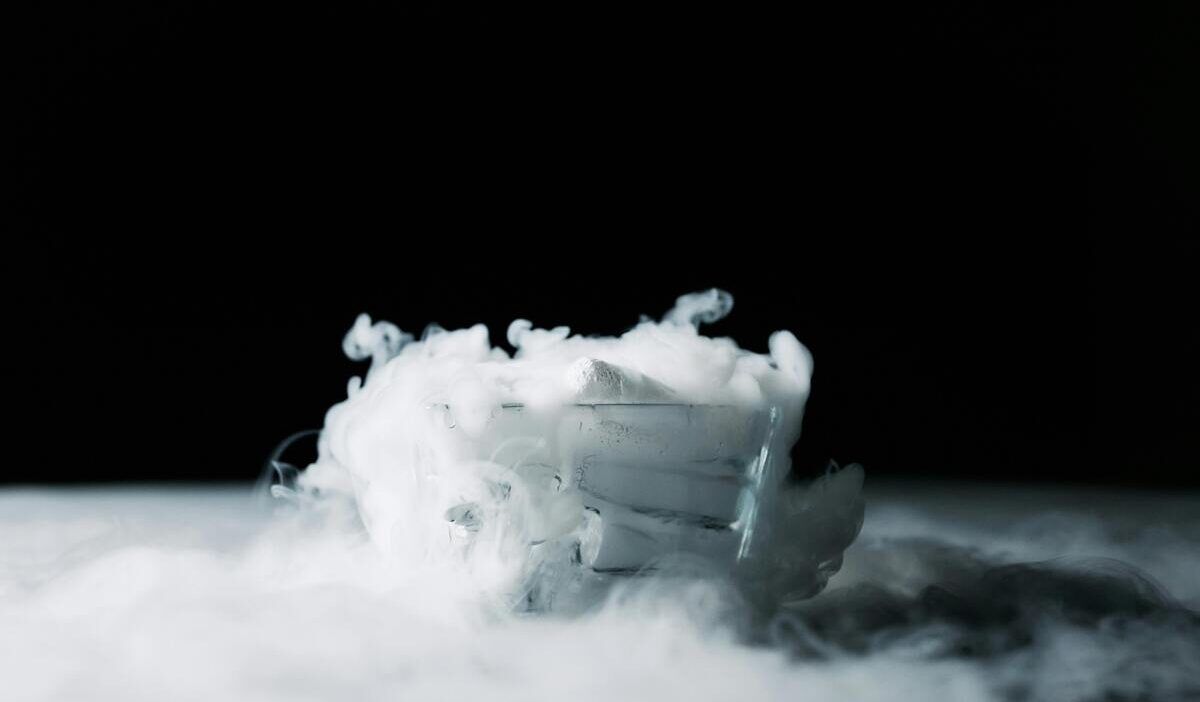
Dry ice is different from regular ice in one important way: it does not melt into water. Instead, it turns directly from a solid into carbon dioxide gas through a process called sublimation. That is why many people are surprised when a full block seems to “vanish” much faster than expected.
Because of that, one practical question comes up often: how long does dry ice last?
The answer depends less on the dry ice itself and more on where it is stored, how much you bought, airflow exposure, and the surrounding temperature. A small amount left in a warm room may disappear quickly, while properly packed dry ice can last much longer.
How Long Does Dry Ice Last in Real Conditions?
When people ask “how long does dry ice last”, they are usually looking for one number. In reality, dry ice lifespan changes dramatically depending on environment.
- In open air, dry ice may last only a few hours
- In an insulated cooler, it may last 18 to 24 hours or longer
- Larger blocks usually last longer than pellets or small pieces
- Better insulation slows sublimation significantly
Dry ice naturally loses mass over time because it is constantly converting into gas. You are not “using it up” in the normal sense, it is disappearing gradually from the moment it is made.
Larger blocks tend to last longer because they have less exposed surface area relative to volume. Smaller pellets or crushed dry ice create more surface exposure, which speeds sublimation.
So, if longevity matters more than fast cooling, blocks are usually the better option.
Why room temperature matters? Warm surroundings accelerate sublimation. A container left in a hot garage or vehicle may lose dry ice much faster than one stored in a cool shaded space.
Where You Store It Changes Everything?
Storage is the biggest factor in determining how long does dry ice last. Two people can buy the same amount on the same day and lose it at very different speeds simply because of where they keep it.
Dry ice performs best in insulated containers that reduce heat transfer while still allowing gas to vent safely.
How Long Does Dry Ice Last in a Cooler
The answer depends heavily on cooler quality and how often it is opened.
A well-insulated cooler that stays closed can often preserve dry ice for 18 to 24 hours, and sometimes longer. Premium coolers or large blocks may extend that timeline further when:
- Empty air space is minimized
- The cooler remains closed as much as possible
- The cooler is kept in shade or indoors
- Dry ice is wrapped loosely in paper or cardboard for buffering
Every time the lid opens, warm air enters and shortens lifespan. This is one of the biggest reasons people lose dry ice earlier than expected.
>>> Read more: Can You Buy Soda With EBT? The Truth Most People Get Wrong
How Long Does Dry Ice Last When Shipping
Dry ice is commonly used for food delivery, frozen goods, and temperature-sensitive shipments. If you need to know how long does dry ice last when shipping, packaging quality matters more than distance alone.
Many properly packed shipments are designed to hold temperature for 24 to 48 hours, sometimes longer with commercial insulation systems. Carriers and packaging providers often calculate expected sublimation rates based on:
- Outside temperature
- Transit time
- Package size
- Amount of dry ice used
- Insulation thickness
That is why overnight shipping with dry ice is common, while longer transit often requires larger quantities or better packaging.
If shipping something important, timing delivery often matters more than simply adding more dry ice.
How Long Does Dry Ice Last in a Freezer
This question surprises many people, because the answer is often not as long as expected.
A standard household freezer is cold, but it is not designed specifically for dry ice storage. Many home freezers are much warmer than dry ice temperature, so sublimation still continues.
Dry ice may last somewhat longer in a freezer than at room temperature, but not indefinitely. In some cases, it may also cause the appliance thermostat to behave unpredictably because of extreme cold around sensors.
Where Most People Lose Half of It
Many people assume they bought too little dry ice when the real problem was handling.
The most common causes of rapid loss include:
- Opening the cooler repeatedly to check it
- Leaving it in direct sunlight or a hot vehicle
- Using thin or poorly insulated containers
- Buying pellets when blocks were better suited
- Purchasing too early before actual need
In many cases, people lose a large portion before they even begin using it.
Using It at the Right Time Beats Using More
One of the smartest ways to use dry ice is timing your purchase close to when you actually need it.
Instead of buying extra days early, many people get better results by:
- Buying the same day when possible
- Pre-cooling the container first
- Keeping the lid closed until needed
- Matching size and form to the task
- Planning transport before pickup
For example, someone using dry ice for a party effect, frozen transport, or camping trip often gets better performance from good timing than from buying double the amount.
Final Thoughts
Dry ice seems simple, but its lifespan depends almost entirely on how you manage heat exposure. It does not sit still the way regular ice does, it begins disappearing from the moment you receive it.
In open air, it may vanish quickly. In a closed, insulated cooler, it can last long enough for many practical uses. In shipping, packaging quality becomes the deciding factor.
If you plan ahead, store it properly, and use it close to the moment you need it, you often need less than you think.