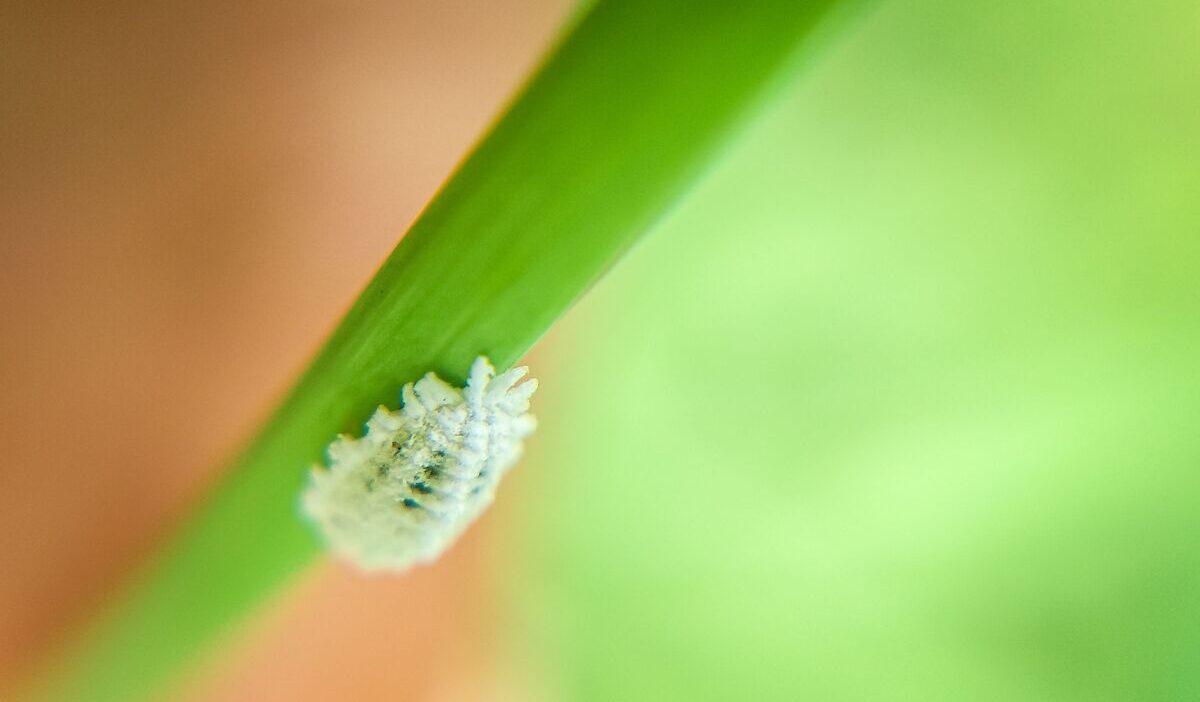
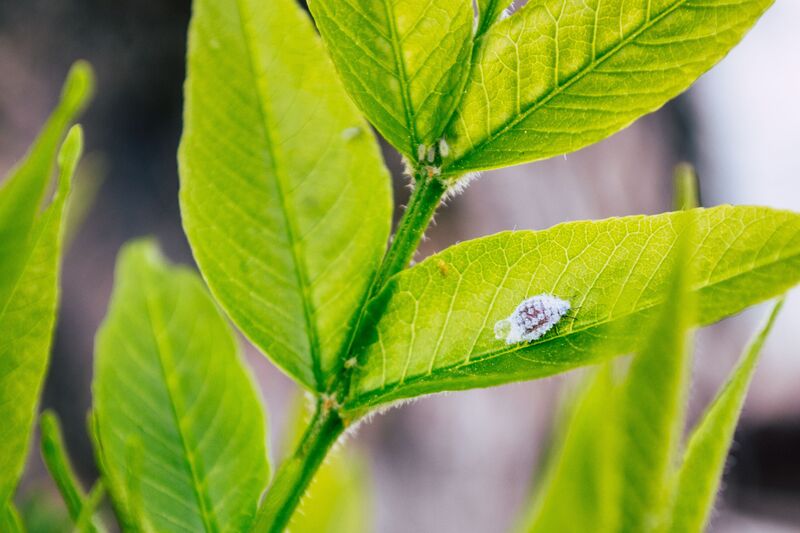
Mealybugs are small sap-feeding insects covered in a white, waxy coating that makes them look like bits of cotton stuck to leaves and stems. They often hide in leaf joints, under leaves, around new growth, and sometimes below the soil on plant roots.
The safest approach to how to get rid of mealybugs is to catch the infestation early, remove visible insects, treat the entire plant, and repeat treatment until no new bugs appear. One treatment is rarely enough because eggs and hidden nymphs may survive the first round.
1. What Are the Key Signs of a Mealybug Infestation on Houseplants?
The most obvious sign is a white, cottony or powdery buildup around leaf axils, stems, and the undersides of leaves. Adult mealybugs are usually around 1/8 to 1/4 inch long, depending on age and species.
A single female may deposit 300 or more eggs inside a waxy egg mass, which is one reason an infestation can become difficult to manage if it goes unnoticed. Mealybugs may live around 4–10 weeks and can continue reproducing indoors where temperatures stay favorable.
When checking how to get rid of mealybugs, inspect every tight crevice rather than looking only at exposed leaves.
2. How to Get Rid of Mealybugs?
The best treatment depends on how large the infestation has become. A few visible insects can often be managed manually, while a heavily infested plant may require repeated whole-plant treatments or even disposal to protect nearby plants.
The basic strategy for how to get rid of mealybugs is removal first, full coverage second, and repeated monitoring afterward.
Remove Visible Mealybugs
For a light infestation, remove individual insects and egg masses manually.
A cotton swab dipped in isopropyl alcohol can be dabbed directly onto mealybugs. A concentration of 70% or less can be used for spot treatment, but test it on a small section of the plant 1–2 days before wider use because sensitive foliage may burn.
Treat the Whole Plant
When bugs appear in several areas, spot treatment alone may miss protected colonies.
Insecticidal soap, horticultural oil, neem-based products, or another houseplant treatment labeled for mealybugs can be applied to the entire plant.
Coverage is important because many of these products work only when they contact the pest directly.
Repeat the Treatment
Eggs can remain protected inside waxy sacs, and newly hatched crawlers may appear after the first treatment. Depending on the product, treatment may need to be repeated several times.
For some insecticidal-soap programs, repeat applications may be needed approximately 5 days apart for 2–3 treatments, although the exact interval should always follow the product label.
Inspect the plant whenever you water it. If new white insects or egg masses appear, repeat treatment promptly instead of waiting for the population to rebuild.
>>> Read more: How to Get Rid of Ladybugs in Your House: Indoor & Outdoor Control
3. How to Identify and Eliminate Root Mealybugs?
Suspect them when a plant remains weak, yellow, or stunted even though no obvious insects are visible above ground. When the plant is removed from its pot, you may see white waxy material on the roots, around the root ball, or along the inside of the pot.
Root-feeding mealybugs are particularly associated with plants such as African violets and gardenias, although other houseplants can also be affected. If root mealybugs are confirmed:
- Isolate the plant immediately.
- Remove it from the pot.
- Discard heavily infested potting mix.
- Clean the container before reuse.
- Remove visibly infested or dead roots when appropriate.
- Repot in fresh, clean growing medium.
- Use only a soil treatment labeled for root mealybugs and that specific plant if additional control is necessary.
4. How to Prevent Mealybugs From Spreading to Other Plants
Mealybugs spread most easily when infested plants touch healthy plants or when mobile young nymphs, called crawlers, move to new feeding sites.
The most important prevention step is isolation. Move an infested plant away from the rest of the collection as soon as you notice symptoms. Inspect nearby plants carefully, especially those that were touching it.
Indoor plants are especially vulnerable because stable temperatures allow mealybug populations to persist throughout the year, while natural predators that suppress them outdoors are usually absent.
>>> Read more: How to Get Rid of Stink Bugs in Your Home and Keep Them Out
5. FAQs
What Causes Mealybugs to Appear on Plants?
Mealybugs usually enter a home on an already infested plant, cutting, pot, or plant material.
Warm indoor conditions then allow them to reproduce without the seasonal interruptions and natural predators found outdoors.
Can Mealybugs Spread From Plant to Plant?
Yes. Young crawlers are mobile and can move across leaves, pots, and nearby surfaces before settling to feed.
Newly hatched crawlers are one of the main stages responsible for spreading infestations to new plants.
How Long Does It Take to Get Rid of Mealybugs?
Expect control to take several weeks rather than one day. Mealybugs may require multiple treatments because eggs can survive initial contact sprays and new nymphs continue to hatch.
Their overall life span may range around 4–10 weeks, while some common houseplant mealybugs mature in roughly 2 months.
6. Final Thoughts
The most reliable answer to how to get rid of mealybugs is to act early and keep treating until the full life cycle has been interrupted.
Remove visible insects with a cotton swab or water, then treat the whole plant when the infestation is more widespread. Repeat treatment according to the label because eggs and hidden nymphs may survive the first application.