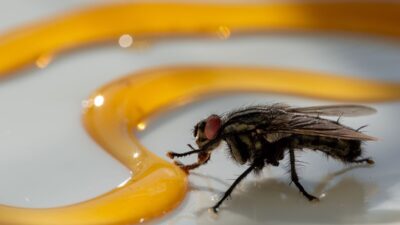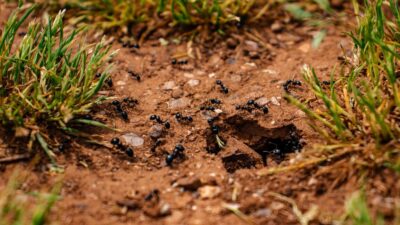
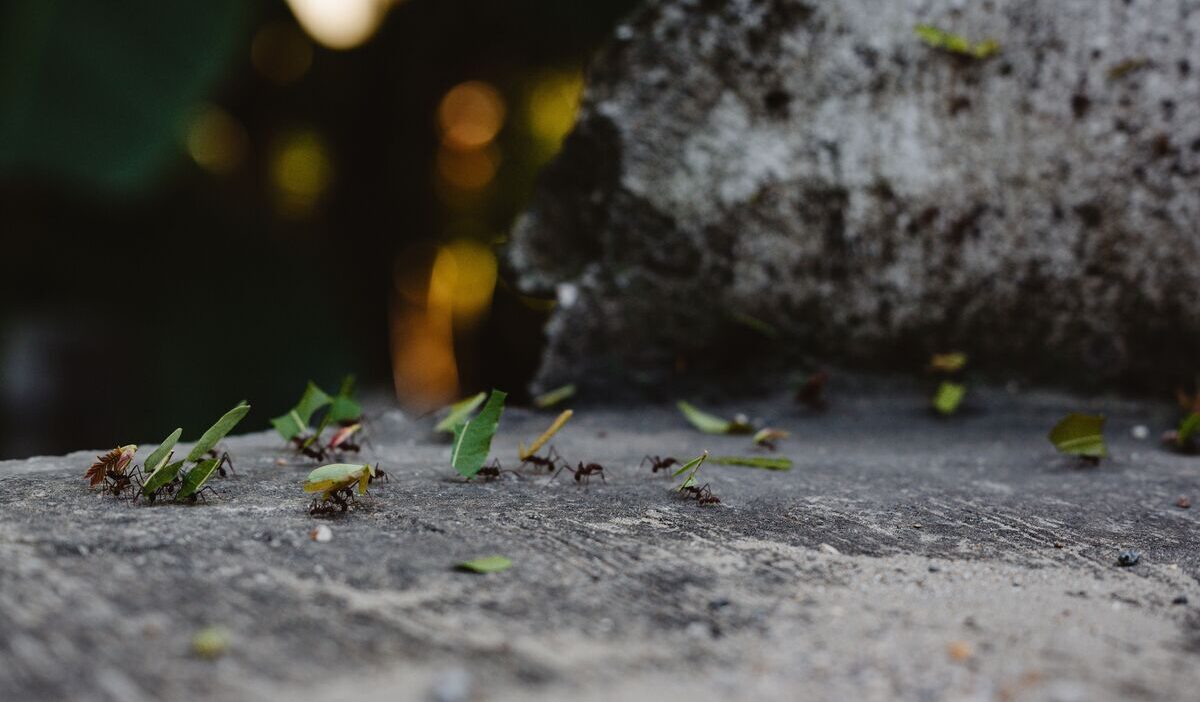
Killing the ants on a countertop may make the problem disappear for a few hours, but it does not necessarily affect the nest. Most household ants you see are workers searching for food or water, while queens, developing young, and most of the colony remain hidden.
The most effective approach to how to get rid of ants permanently is to identify the species, locate the nesting area, and use a treatment that reaches the entire colony.
Slow-acting bait is often the best tool because workers can carry it back into inaccessible spaces and share it with nestmates.
1. Why Killing the Ants You See Is Not Enough
Surface sprays can reduce visible activity quickly, but that does not mean the infestation has been eliminated.
Worker Ants Are Only Part of the Colony
Workers are wingless females responsible for gathering food, maintaining the nest, defending the colony, and caring for developing ants.
The queen, or in some species, several queens, remains protected inside the nesting area and produces eggs.
Killing a trail of workers therefore removes only a fraction of the population. In carpenter ant colonies, for example, only a relatively small percentage of ants may be outside foraging at any given time.
Ant Trails Can Quickly Form Again
Foraging ants leave chemical trails that guide other workers toward reliable food and water. Even after visible ants are wiped away, another group can rediscover the resource and rebuild the route.
Some Ant Species Have Multiple Nests
Not every infestation involves one queen in one nest.
Some species can maintain multiple queens or form new colonies through “budding.” Pharaoh ants are especially problematic because disturbance can cause colonies to split and spread to new locations.
Carpenter ants may also form satellite colonies containing large numbers of workers away from the main nest.
2. How to Locate the Main Nest Before Selecting a Treatment Strategy
Before deciding how to get rid of ants permanently, observe active workers rather than treating the first place you see them.
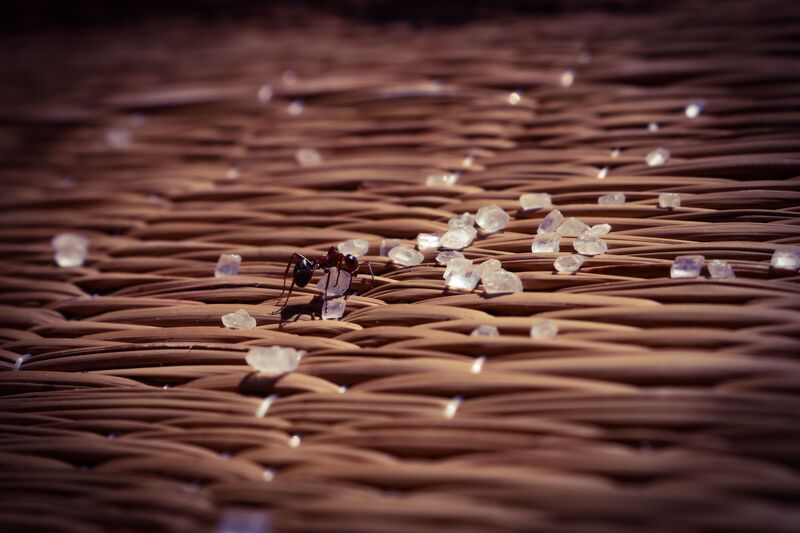
Follow trails in both directions. One end usually leads toward food or water, while the other may disappear beneath a baseboard, through a wall gap, beneath flooring, or outside near the foundation.
Most household ants actually nest outdoors and enter buildings only to forage, although some species can establish nests behind moldings, inside wall voids, beneath countertops, or in moisture-damaged wood.
If winged ants emerge from inside the building, an indoor nest is more likely.
3. How to Get Rid of Ants Permanently
Start by removing competing food and moisture. Clean crumbs, grease, syrup, pet food, and spills. Store food in hard sealed containers and repair dripping faucets or leaking pipes.
Fast-acting sprays usually provide short-term suppression. Slow-acting baits are more useful for colony elimination because workers survive long enough to transport the active ingredient back to nestmates.
4. Use Ant Bait to Reach the Colony Step-by-Step
Baiting is central to how to get rid of ants permanently, but success depends on bait selection, placement, and patience.
Choose Bait Ants Are Actually Eating
Different species, and even the same colony at different times, may prefer sweet, greasy, or protein-rich foods.
Before relying on one product, check whether ants are actually feeding from it. Liquid and gel formulations may be accepted more readily when solid bait dries out.
If ants consistently walk past the bait, try a different labeled formulation rather than adding more of the same.
Place Bait Along Active Trails
Put bait where ants already travel, such as near foundation edges, wall gaps, plumbing routes, or confirmed nest entrances.
Do not place bait in random corners simply because ants were seen elsewhere. Workers need to find the station easily and return repeatedly.
Avoid applying contact insecticide nearby. Repellent or fast-killing residues can prevent workers from feeding long enough to carry the bait into the colony.
Give the Bait Time to Work
Ant bait is deliberately slow.
Visible effects may begin within one to two weeks under favorable conditions, but complete elimination can take several weeks to several months, depending on species, colony size, nest structure, and bait acceptance.
Do not assume treatment failed because ants are still visiting bait during the first few days. Continued feeding is often exactly what you want.
Know When to Replace or Move the Bait
Replace bait when it has dried out, been consumed, or is no longer attracting workers.
Move it only when the ant route changes or activity shifts elsewhere. Constantly relocating stations may interrupt feeding.
Once ant numbers fall sharply, keep monitoring before sealing the entry points.
>>> Read more: How to Get Rid of Aphids on Plants and Keep Them From Coming Back
5. Why Ants May Return After Treatment?
An apparent relapse does not always mean bait failed.
Ants may return because the colony was only partially affected, a satellite nest survived, or the species has multiple queens.
Another colony may also have found the same food source, or the bait may have dried out before enough of it was transferred.
In some cases, workers switch food preferences, food or water becomes available again, or entry points remain open.
Outdoor colonies may also continue sending workers inside if mulch, leaves, groundcover, or vegetation touches the foundation. Keeping these materials away from the building reduces shelter close to entry points.
>>> Read more: How to Get Rid of Earwigs: What Attracts Them and How to Stop
6. FAQs
To help address common concerns and clarify the most effective long-term solutions, here are expert answers on how to get rid of ants permanently from your home:
How Long Does It Take to Eliminate an Entire Ant Colony?
There is no universal timeline. Bait effects may become noticeable within one or two weeks, while elimination can require several weeks to several months.
Can an Ant Colony Survive After the Queen Dies?
It depends on the species. A colony with one queen will eventually decline if that queen is eliminated because no new workers can be produced.
Why Do Ants Suddenly Disappear From Bait?
Several explanations are possible. The bait may have dried out, colony food preferences may have changed, the treatment may be working, or workers may have switched to another food source.
Can Ants Build Nests Inside Walls?
Yes. Some ants nest behind baseboards, moldings, countertops, wall voids, ceilings, subfloors, attics, and hollow doors.
7. Final Thoughts
The central principle of how to get rid of ants permanently is to treat the colony rather than repeatedly killing workers.
Follow active trails, identify likely nesting areas, remove competing food and moisture, and place slow-acting bait where ants are already feeding. Give the treatment enough time to move through the colony, then clean old trails and seal entry points after activity falls.