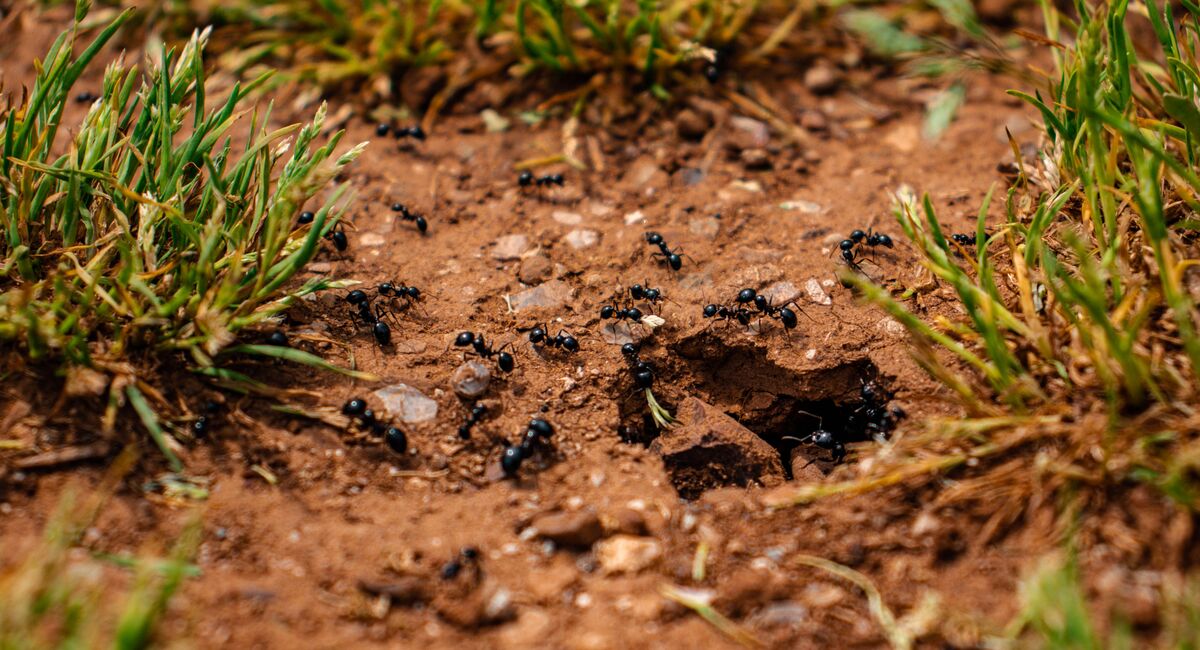
Ants inside a home are usually workers searching for food or water rather than the whole colony moving indoors. Most household ant colonies remain hidden outdoors, under flooring, behind walls, or in other protected spaces, while only a fraction of the workers become visible.
The most effective approach to how to get rid of ants in the house is therefore to use the workers to reach the colony. Follow the trail, remove competing food and water, place a slow-acting bait where ants are already traveling, and avoid disturbing the route until feeding declines.
1. Read the Ant Trail Before You Treat It
An ant trail is useful information. Workers leave chemical trails as they move between the nest and reliable sources of food or water, allowing other ants to follow the same route.
Before cleaning or spraying, watch the ants for several minutes. Follow them in both directions and look for the point where they disappear into a baseboard, wall gap, window frame, cabinet seam, plumbing opening, or foundation crack.
When working on how to get rid of ants in the house, avoid wiping away the active trail immediately if you plan to use bait. The same route can guide workers directly to the treatment.
2. Choose the Treatment Based on Where the Colony May Be
The likely nest location changes how the problem should be approached.
If ants travel through a window or foundation crack and disappear outdoors, the colony may be close to the building perimeter. Bait near that route can intercept workers before they travel farther into the home.
If ants repeatedly emerge from wall gaps, electrical areas, ceilings, or cabinets, an indoor nest or satellite colony is more likely
Carpenter ants, for example, may form satellite nests separate from the parent colony, while pharaoh ants can establish multiple queens and split into new colonies when disturbed.
This is one reason broad spraying is not always the best answer to how to get rid of ants in the house. Surface treatments may kill workers without reaching a colony that can contain thousands to tens of thousands of individuals.
>>> Read more: How to Get Rid of Sugar Ants in the House and Stop Them From Coming Back
3. How to Get Rid of Ants in the House
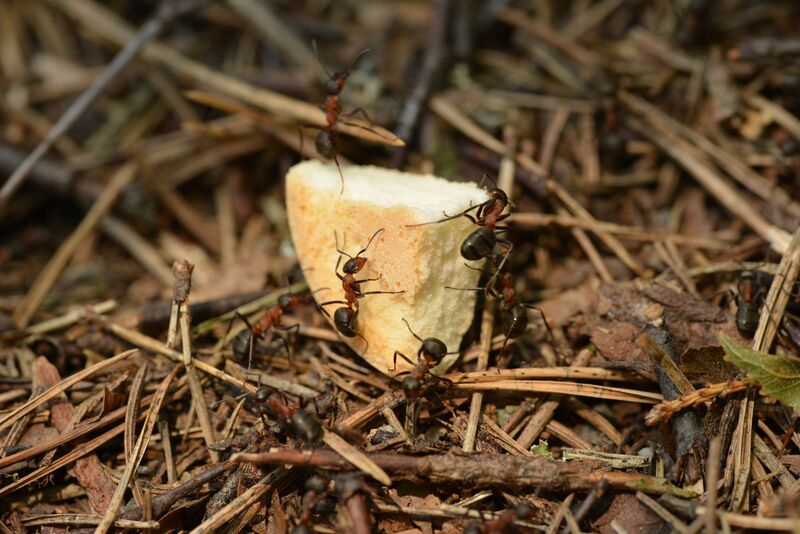
The goal is to make the bait more attractive than anything else the ants can find.
Slow-acting bait gives workers enough time to carry treated food back to the colony and share it with nestmates.
Baiting usually starts producing visible results within about one to two weeks. Although eliminating an indoor colony can take several weeks to several months depending on the species, nest structure, and bait acceptance.
Remove Competing Food
Ant bait cannot work well when the kitchen offers better options.
Clean crumbs, grease, syrup, honey, pet food, and beverage spills. Store vulnerable foods in hard containers with tight-fitting lids rather than paper or cardboard packaging. Even a crumb or a drop of sugary residue can support foraging ants.
Rinse recycling, wipe beneath countertop appliances, and keep garbage containers clean.
Do not over-clean the active bait route itself during the first stage. Remove competing food around it, but let ants continue finding the bait.
Remove Water Sources
Food is only part of the problem. Dripping faucets, leaking pipes, damp sponges, condensation, clogged gutters, and moisture-damaged wood can keep colonies visiting a building.
Repair leaks and dry wet areas, especially beneath sinks, dishwashers, refrigerators, and bathroom fixtures.
Removing water matters because it reduces alternative resources and can improve bait acceptance, particularly in dry indoor environments.
Leave the Bait Area Alone
Seeing more ants around bait during the first day or two does not necessarily mean the infestation is getting worse.
Workers may recruit additional nestmates once a new food source is discovered. In one EPA-registered bait label, recruitment to a newly discovered gel source may begin within roughly 10–20 minutes, illustrating how quickly a visible trail can strengthen around an accepted bait.
Do not spray ants feeding on bait. Contact insecticides can kill workers before they return to the colony and may discourage others from approaching the treatment.
Leave the bait in place as long as workers are actively feeding. Replace it when it dries out, is consumed, or stops attracting ants.
4. How to Know When the Ant Problem Is Actually Gone
A quiet countertop for one day is not enough evidence that the colony has been eliminated.
For how to get rid of ants in the house successfully, look for a sustained decline rather than an overnight disappearance. Signs that treatment is working include:
- Fewer ants visiting the bait each day
- Trails becoming shorter or less organized
- No new trails appearing in nearby rooms
- No winged ants emerging indoors
- Bait remaining untouched after earlier heavy feeding
- No activity returning after food and water are restored to normal household conditions
Continue monitoring for at least another week after visible activity stops. If ants reappear, check whether the bait dried out, the trail moved, or the colony switched food preferences.
Ant feeding preferences can change with colony needs. A bait accepted one week may be ignored later if workers shift from sweet foods to greasy or protein-rich resources.
Only after activity has clearly declined should you clean old trails thoroughly and seal cracks or openings used as entry routes.
>>> Read more: How to Get Rid of Aphids on Plants and Keep Them From Coming Back
5. FAQs
Why Do Ants Suddenly Appear Inside the House?
A worker may have discovered food or water and laid a chemical trail that recruits additional ants. Warm weather, dry outdoor conditions, rain, new food sources, or a leaking pipe can also increase indoor foraging.
Can Ants Build a Colony Inside a House?
Yes. Although most household ants nest outdoors, some species can establish colonies inside wall voids, beneath flooring, behind moldings, in cabinets, or in moisture-damaged wood.
How Long Should You Leave Ant Bait Out?
Leave bait in place while ants continue feeding and replace it if it dries out or is consumed.
Visible reduction may begin within one to two weeks, while full control can take several weeks to several months.
6. Final Thoughts
The most reliable approach to how to get rid of ants in the house is to use their own foraging behavior against the colony.
If ants continue emerging from several walls, winged ants appear indoors, or activity persists for months despite correct baiting, professional identification may be needed to locate an indoor or multi-nest colony.