Ladybugs are beneficial outdoors, but some species, especially multicolored Asian lady beetles, can become a nuisance when large numbers move into homes for winter. They may gather around windows, crawl from wall voids on sunny days, and leave yellowish stains or an unpleasant odor if crushed.
The most effective approach to how to get rid of ladybugs is simple: remove the insects already inside without crushing them, then seal the gaps they used to enter. Indoor pesticide spraying is usually unnecessary because these beetles do not reproduce inside the home.
1. How to Get Rid of Ladybugs Inside Your House
Once ladybugs are already indoors, physical removal is usually the fastest and cleanest option.
Spraying walls, windows, or attic spaces rarely provides long-term control because more beetles may remain hidden behind siding, ceilings, or wall voids.
For how to get rid of ladybugs indoors, focus on vacuuming, limited trapping, and avoiding unnecessary disturbance.
Vacuum Up Ladybugs
A vacuum is one of the most effective ways to remove clusters without crushing them.
Vacuum beetles from windowsills, walls, curtains, ceiling corners, and light fixtures. If you use a bagged vacuum, remove or seal the bag afterward so beetles cannot crawl back out.
A nylon stocking placed inside the vacuum hose can also collect the beetles before they reach the machine.
Use Light Traps for Repeated Indoor Activity
Lady beetles are attracted to illuminated areas, which explains why they commonly gather around windows and light fixtures after emerging from hidden spaces.
Light traps may help in dark, enclosed spaces such as attics where beetles repeatedly emerge. However, they usually catch only a limited portion of the insects appearing in normal living areas.
Avoid Crushing Them
Do not squash ladybugs against walls, curtains, or furniture. Multicolored Asian lady beetles can release a foul-smelling yellow liquid from their leg joints when disturbed.
This defensive secretion can stain light-colored surfaces and may cause localized skin reactions in sensitive people.

2. How Do Ladybugs Get Inside?
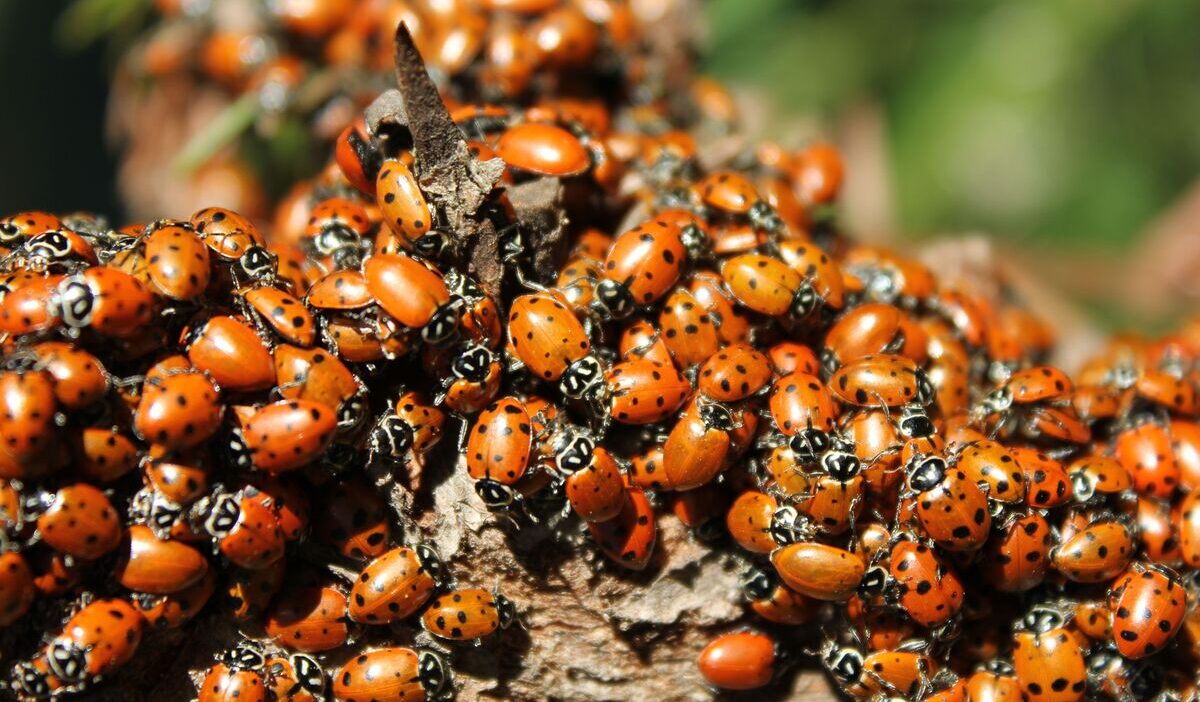
Large indoor invasions usually start in fall. Multicolored Asian lady beetles search for protected places to overwinter as temperatures drop.
They often gather on sunny south- and southwest-facing walls before entering through cracks around windows, doors, siding, fascia boards, vents, chimneys, and utility openings.
Gaps as small as about 1/8 inch may allow lady beetles and other insects to enter. In colder regions, fall migration commonly occurs during warm, sunny afternoons after cooler nights.
Flights can become especially noticeable when temperatures rise back into the mid-60s°F or higher.
The beetles do not breed inside. Those appearing during winter or spring generally entered the structure during the previous fall.
>>> Read more: How to Get Rid of Stink Bugs in Your Home and Keep Them Out
3. What to Do When Ladybugs Keep Appearing at the Windows?
Ladybugs at the window are usually trying to move toward light after becoming active inside a wall or attic space.
Vacuum the visible insects first, then inspect the surrounding trim, baseboards, ceiling joints, window casing, and nearby vents for small openings.
Temporarily sealing interior cracks can stop beetles from continuing to enter the room. Before the next fall invasion, inspect the exterior and permanently seal gaps around:
- Window and door frames
- Utility pipes and cables
- Fascia boards
- Siding joints
- Attic vents
- Soffits
- Chimney edges
Screens on vents should be repaired or replaced. Number 20 mesh or smaller screening can be used over appropriate ventilation openings while maintaining airflow.
The best time for this work is late spring through summer, before beetles begin searching for overwintering sites. Preventive sealing is much more reliable for how to get rid of ladybugs than trying to kill beetles after they have already entered wall voids.
4. When Is Professional Pest Control Worth It?
Most small indoor infestations do not require professional treatment. Vacuuming and exclusion are usually enough.
Professional help becomes more useful when hundreds or thousands of beetles repeatedly enter living spaces, the exterior has many inaccessible cracks or beetles are concentrated in high rooflines or large attic areas.
Large overwintering groups can be substantial. In severe infestations, tens of thousands of beetles may collect inside attics, ceilings, and wall voids.
>>> Read more: How to Get Rid of Boxelder Bugs Inside and Outside Your Home
5. FAQs
Why Are There Suddenly So Many Ladybugs in My House?
The most likely explanation is overwintering behavior.
Asian lady beetles gather on buildings during fall and enter cracks before cold weather arrives. On sunny winter or early spring days, warmth can reactivate them and draw them toward windows and lights.
Are Ladybugs Harmful to People or Pets?
Ladybugs are generally nuisance pests rather than dangerous household insects. They do not damage wood, furniture, clothing, or stored food and do not reproduce indoors.
Multicolored Asian lady beetles can occasionally pinch or bite people, and large infestations may trigger allergic reactions in sensitive individuals. Pets that eat large numbers may also experience irritation inside the mouth.
How Long Can Ladybugs Live Inside a House?
Multicolored Asian lady beetle adults typically live around 30–90 days, although some individuals can survive much longer under favorable conditions.
Inside buildings, overwintering beetles remain mostly inactive until warming temperatures trigger movement. They cannot establish a new indoor generation.
Will Ladybugs Leave the House on Their Own?
Some will eventually find their way outdoors as spring temperatures increase, while others may become trapped indoors and die.
Waiting is possible when only a few beetles are present, but vacuuming is faster and prevents staining. Seal exterior openings before the following fall so the same problem does not repeat.
6. Final Thoughts
The most practical approach to how to get rid of ladybugs is to remove indoor beetles physically and prevent the next invasion.
Vacuum clusters instead of crushing them, use light traps only as a supporting tool, and pay attention to windows where beetles repeatedly emerge. Then inspect doors, siding, vents, utility openings, soffits, and roofline gaps before fall.