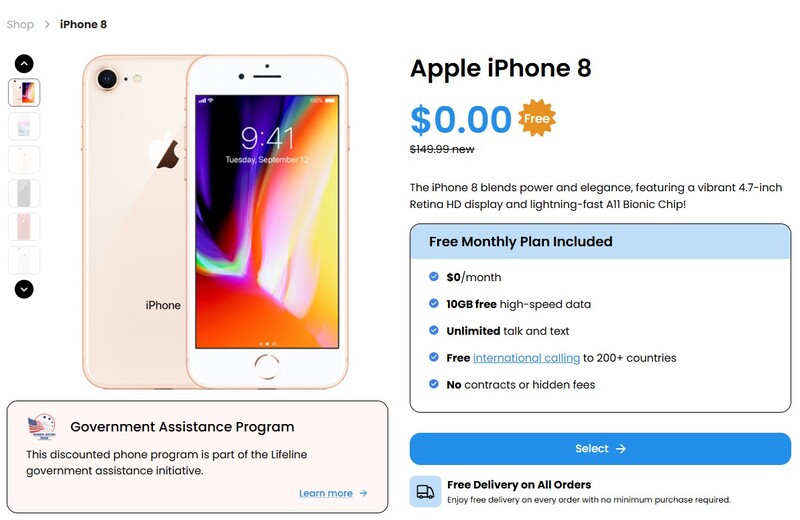
The idea of a free iPhone 8 still attracts plenty of interest, even in 2026. While the model is now considered legacy hardware, it hasn’t completely disappeared from assistance program inventories.
But here’s the honest reality: availability is far more limited than it used to be, and many applicants misunderstand how these offers actually work.
This guide explains when you might still see a free iPhone 8 government phone, why timing matters so much, and what to expect before you apply.
Three Very Different Ways People End Up With an iPhone 8
When someone says they got a free iPhone 8, it usually comes from one of three pathways, and they are not equal.
Lifeline promotional inventory
The most legitimate path is through the federal Lifeline program, which helps low-income households afford phone service.
Participating providers sometimes include older smartphones in their device pools. Because the iPhone 8 is now relatively inexpensive on the secondary market, it occasionally appears in these catalogs.
Refurbished upgrade selections
Many providers maintain tiers of refurbished devices. Lower-cost Apple models, including the free iPhone 8, are sometimes used to:
- Fulfill baseline free offers
- Rotate older warehouse stock
- Support entry-level Lifeline enrollments
This is why availability can suddenly appear and disappear.
Carrier switch promotions (less common)
Some users encounter offers like a free iPhone 8 Plus when you switch, typically tied to:
- Port-in requirements
- Trade-ins
- Bill credit promotions
However, these deals usually involve conditions and are not the same as Lifeline assistance.
Free iPhone 8 Government Phone: What Usually Happens Behind the Scenes
Many applicants assume the government directly distributes phones. That’s not how the system works.
The real structure
- Lifeline is a federal subsidy program
- Private carriers distribute devices
- Eligibility must be verified
- Inventory varies by provider
The program itself primarily reduces service costs, while phones are promotional add-ons offered by participating companies.
Providers such as AirTalk Wireless and others in the Lifeline ecosystem maintain rotating device inventories that may include older iPhones, depending on supply.
Why does the iPhone 8 still appear occasionally?
Several market factors keep the free iPhone 8 government phone alive in limited quantities:
- Large historical production volume
- Mature refurbishment pipelines
- Very low wholesale cost
- Adequate performance for basic use
- Strong brand recognition
Because of this, the model still fits entry-level program economics better than newer iPhones.
Timing Matters More Than Most Applicants Realize
One of the biggest secrets in the Lifeline device world is that timing can outweigh eligibility.
Inventory cycles drive availability
Even fully qualified applicants may or may not see the iPhone 8, depending on:
- Refurbishment supply
- Regional demand
- Provider inventory refreshes
- Promotion windows
- ZIP-code device pools
That’s why two approved users can see completely different phone options.
When the iPhone 8 is most likely to appear
Historically, older models like the free iPhone 8 show up more often when:
- Providers clear warehouse stock
- New device batches arrive
- Promotion cycles change
- Demand for premium models spikes
Applicants who check periodically often have better luck than those who apply only once.
>>> Read more: Free iPhone 12: What to Know Before You Apply in 2026
Quick Reality Checklist Before You Apply
Before pursuing a free iPhone 8, run through this quick sanity check.
You may have a realistic shot if:
- You qualify for Lifeline (SNAP, Medicaid, SSI, etc.)
- You apply through a verified provider
- You submit clean documentation
- You live in a supported service area
- You’re open to refurbished devices
Expectations to keep realistic
- The iPhone 8 is not guaranteed
- Inventory changes frequently
- Many users receive different models
- Newer iPhones are prioritized in some markets
- Only one Lifeline benefit is allowed per household
Understanding this upfront prevents frustration later.
FAQs
Is the free iPhone 8 still widely available?
No, it appears only occasionally in provider inventories. Most catalogs now focus on slightly newer models.
Do government programs guarantee this model?
No. Lifeline guarantees service support, but specific phones depend on provider inventory and promotions.
Why do some people get newer phones instead?
Because device distribution is inventory-based. Providers allocate phones depending on stock, region, and promotion timing.
How long does the process usually take?
Most Lifeline applications are reviewed within a few business days once documents are submitted correctly, though shipping times vary by provider.
Are switch deals better than assistance programs?
It depends:
Switch deals
- Often require trade-ins or bill credits
- May involve long commitments
Lifeline programs
- Designed for income-qualified households
- Typically, a $0 monthly service
- The device depends on availability
For many low-income households, Lifeline remains the more accessible path.
>>> Read more: How Can I Get a Free iPhone? Real Options That May Work
Final Thoughts
Yes, the free iPhone 8 is still possible to find in 2026, but it has clearly moved into the legacy category. Its appearance today is driven mostly by refurbished supply and provider inventory cycles rather than mainstream promotions.
If your goal is simply to secure a functional Apple device at no upfront cost, it can still be a viable outcome. But if you want longer software support and better long-term performance, you may want to keep an open mind about newer models that often appear in Lifeline catalogs.
The smartest approach is simple:
- Verify eligibility first
- Apply through a trusted Lifeline provider
- Submit clean documentation
- Monitor device availability
With realistic expectations and good timing, many eligible households still manage to receive solid smartphones, sometimes even the iPhone 8, through today’s assistance programs.