
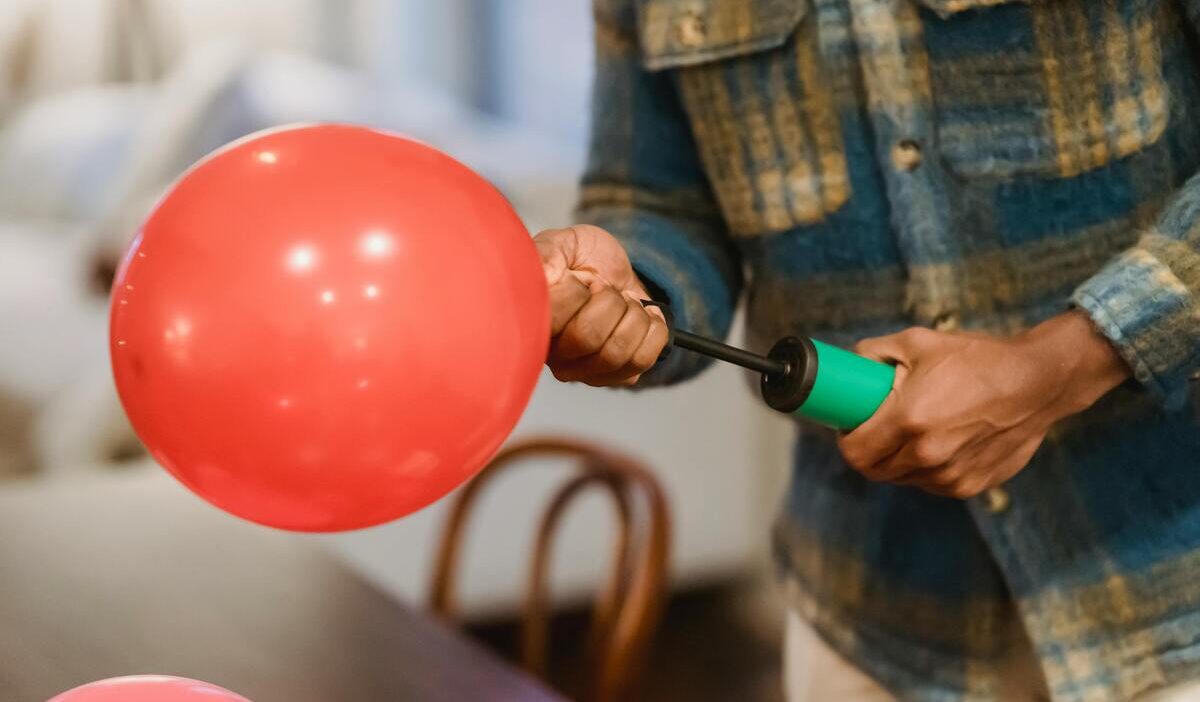
Helium balloons always look perfect right after inflation: floating evenly, fully expanded, and visually clean. But that moment is only the starting point. From the second helium goes in, the balloon begins a slow process of shrinking and losing lift.
How long do helium balloons last? A balloon that looks great in the morning may already start sagging by evening if the timing is off.
Instead of thinking of balloons as lasting a fixed number of hours or days, it helps to view them as a time-sensitive decoration. Their lifespan depends on material, environment, and how close inflation is to the moment they are actually used.
How Long Do Helium Balloons Last on Average?
How long do balloons last with helium?
Latex balloons typically float for 8 to 12 hours, sometimes slightly longer under ideal conditions. Foil balloons, on the other hand, can stay afloat for 3 to 5 days, and occasionally up to a week.
This difference is not random, it comes down to how helium interacts with the material. Helium is a very small gas molecule, which allows it to escape through tiny pores in latex much faster than through the dense structure of foil.
Research and explanations from American Chemical Society show that gas diffusion is significantly higher in elastic materials like latex, which explains the shorter float time.

Latex vs Foil: One Choice Changes Everything
Latex balloons are popular for their flexibility, lower cost, and eco-friendlier properties. Foil balloons are more durable, hold shape better, and retain helium much longer.
How Long Do Latex Balloons Last With Helium?
For latex balloons, they are generally limited to the same-day window. Without any treatment, most latex balloons begin to lose noticeable lift within 8 to 12 hours. By the next day, many will no longer float.
However, certain additives like helium sealants can extend float time to 24–48 hours, depending on quality and environmental conditions.
Even with these treatments, latex balloons are still best suited for short-duration events where timing can be controlled closely.
How Long Do Foil Helium Balloons Last
Foil balloons behave very differently. When considering, the range typically extends to 3–5 days, with some lasting even longer indoors.
Their non-porous surface slows helium escape significantly. That allows them to maintain both shape and lift over a longer period.
Because of this, foil balloons are often chosen for:
- Multi-day events
- Early setup installations
- Decorations that need to stay intact overnight
>>> Read more: How Long Does Dry Ice Last? Full Guide for Safe Use
Timing the Inflation Matters More Than Most People Think
Even with the right material, poor timing can ruin the final result. Balloons do not “activate” when the event starts, they begin losing helium immediately after inflation.
Latex balloons should ideally be inflated just a few hours before the event begins. This ensures they are still at peak lift and appearance when guests arrive.
Foil balloons offer more flexibility. They can usually be inflated the day before, making them useful for early preparation or large setups. Planning based on timing often matters more than the balloon type itself.
Why Balloons Shrink Faster Than Expected?
Several environmental factors can accelerate helium loss and shorten how long balloons remain usable:
- Warm temperatures increase gas expansion and leakage
- Direct sunlight weakens balloon material
- Air pressure changes affect float height
- Dry indoor air speeds up latex shrinkage
- Frequent handling loosens seals over time
These variables explain why two identical balloons can perform differently in separate environments.
Best Choice for Birthdays, Weddings, and Multi-Day Events
Different events require different balloon strategies. Choosing based on lifespan rather than appearance alone leads to more reliable results.
For short events like birthdays or parties lasting a few hours, latex balloons remain a popular choice. They are cost-effective and visually impactful when inflated close to start time.
At weddings or larger setups prepared in advance, foil balloons are often more practical. Their longer lifespan reduces the risk of decorations losing quality before the event even begins.
For multi-day events, a combination approach works best:
- Latex balloons for volume and visual density
- Foil balloons for structure and long-lasting focal points
Guidance from organizations like International Live Events Association highlights balancing durability and design for better event execution.
>>> Read more: Can You Buy Soda With EBT? The Truth Most People Get Wrong
FAQs
How to keep helium balloons from deflating?
Keeping balloons indoors, away from heat and sunlight, and minimizing handling can slow helium loss. For latex balloons, using a sealant can extend float time.
Can I buy helium balloons the day before the party?
Foil balloons can usually be prepared a day in advance. Latex balloons should be inflated on the same day unless treated to last longer.
Can I bring my own balloons to Michaels to fill?
Many Michaels locations offer helium filling services, but policies vary. It is best to contact your local store to confirm availability and pricing.
Final Thoughts
Helium balloons are not designed to last indefinitely. Their lifespan begins the moment they are filled, and from that point forward, gradual deflation is inevitable.
So, how long do helium balloons last? In most cases, it depends on three main factors: material, timing, and environment. Latex balloons work best for short-term use, while foil balloons offer longer-lasting performance.
When timing and material align with your event, balloons don’t just float, they stay looking right when it matters most.