Japanese beetles can turn healthy foliage into lace-like remains surprisingly quickly. Adult beetles feed on leaves, flowers, and fruit above ground, while their larvae, white grubs, develop in soil and may damage turf roots.
The most effective approach to how to get rid of Japanese beetles is to assess how much damage is actually occurring, physically remove adults when populations are manageable, protect high-value plants, and treat lawn grubs only when monitoring shows that treatment is justified.
1. How to Check How Serious the Japanese Beetle Problem Is
Before reaching for an insecticide, determine whether the infestation is cosmetic or severe enough to threaten plant health.
Japanese beetles often feed in groups, and damaged leaves can attract additional beetles to the same plants.
Look for Skeletonized Leaves
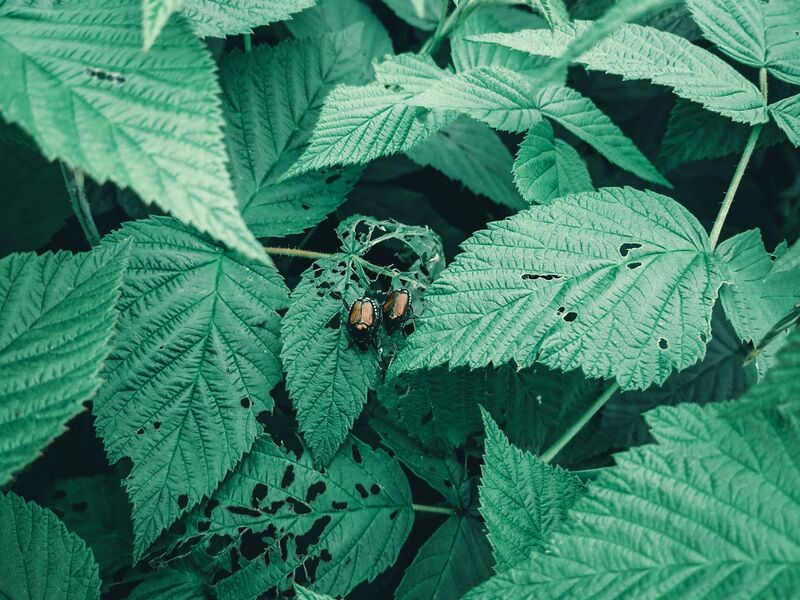
Adult Japanese beetles usually eat the soft tissue between leaf veins, leaving behind a network of veins that gives the leaf a skeletonized appearance.
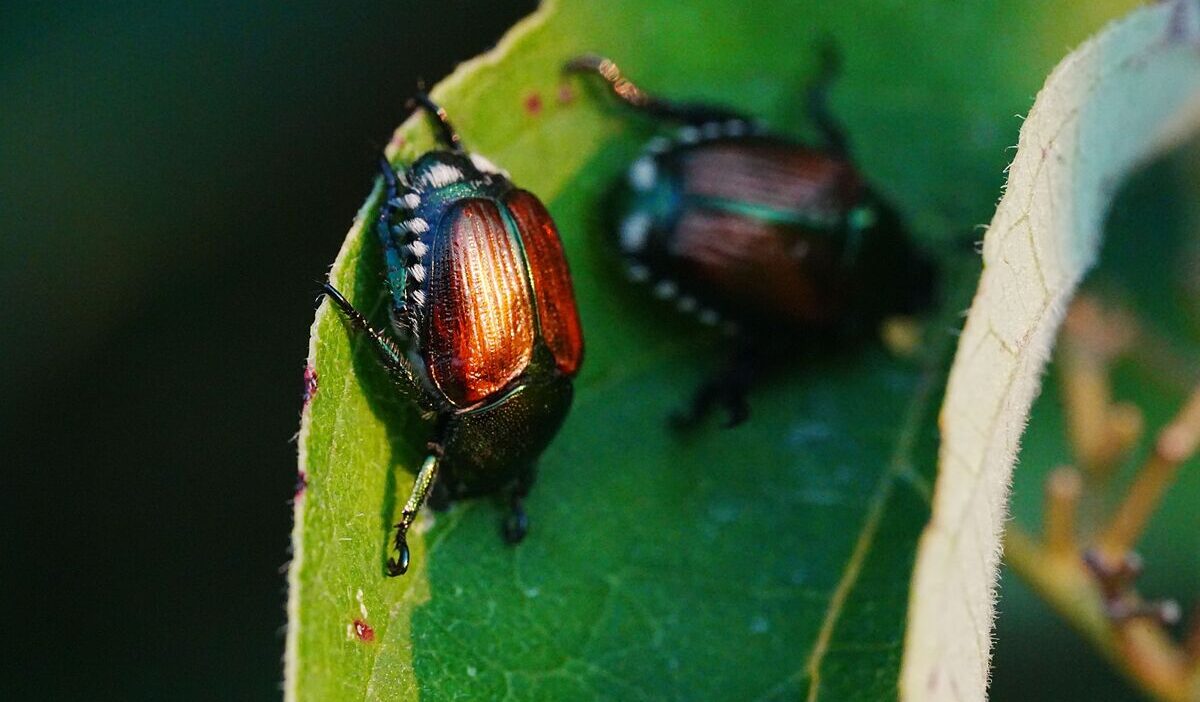
Adults are approximately 3/8 inch long, with metallic green bodies and copper-brown wing covers.
They also have distinctive white tufts of hair along the sides and rear of the abdomen. Their feeding period generally lasts about 6–8 weeks during summer.
Check Flowers and Fruit
Japanese beetles do not limit their feeding to leaves. They may consume flower petals, buds, and the surface of ripening fruit.
Roses are particularly noticeable targets because adults may feed directly inside open flowers. Grapes, raspberries, apples, cherries, and other fruiting plants can also be affected.
When checking how to get rid of Japanese beetles, inspect flowers early in the morning. Cooler temperatures make the adults less active, which also makes physical removal easier.
Look for Lawn Damage
Adult Japanese beetles lay eggs in soil during summer. The larvae hatch and feed on grass roots before moving deeper as temperatures fall.
Heavy grub populations can produce patches of wilted or brown turf that lift easily because root systems have been damaged.
A commonly used treatment threshold is around 10–12 grubs per square foot in non-irrigated turf, although turf condition and local recommendations should also be considered.
2. How to Get Rid of Japanese Beetles?
For small or moderate populations, hand-picking is often enough. In the early morning, hold a container of soapy water beneath the affected leaves and shake or knock the beetles into it. Adults are slower when temperatures are cool, making collection easier.
Repeat removal daily during peak activity. Removing beetles before heavy feeding develops can also reduce the attraction of additional beetles to damaged foliage.
3. Which Garden Plants Do Japanese Beetles Target First?
Japanese beetles feed on more than 300 plant species, but some plants are much more attractive than others. High-risk plants commonly include:
| Frequently Attacked | Usually Less Attractive |
|---|---|
| Roses | Boxwood |
| Grapes | Red maple |
| Linden | Dogwood |
| Birch | Magnolia |
| Japanese maple | Forsythia |
| Raspberry | Lilac |
| Apple | Holly |
| Cherry | Pine |
When planning long-term how to get rid of Japanese beetles, replacing repeatedly damaged plants with less-preferred species can reduce the amount of yearly control required.
4. Should You Use Japanese Beetle Traps?
Japanese beetle traps use floral scents and sex pheromones to attract adults. They are extremely good at attracting beetles, but that is exactly why their placement can become a problem.
For a typical home garden, traps should not be positioned beside roses, fruit plants, patios, or other areas you are trying to protect.
If they are used for monitoring, place them well away from valuable plants whenever possible. Hand-picking and plant protection are usually more predictable tools in smaller landscapes.
>>> Read more: Cockroaches in the Kitchen? How to Get Rid of Cockroaches at the Source
5. How Do You Break the Japanese Beetle Life Cycle in Your Lawn?
Adult control and grub control should be treated as separate decisions. Japanese beetles usually produce one generation per year in much of the United States.
Summer: Reduce Adult Feeding
During adult activity, concentrate on protecting high-value plants.
Hand-pick beetles in the morning, remove severely damaged flowers, and monitor attractive species regularly.
Reduce unnecessary irrigation during peak egg-laying periods when the lawn can tolerate it, because females prefer moist soil for laying eggs.
However, deliberately allowing turf to become severely drought-stressed can cause its own damage, so lawn health still matters.
Late Summer: Watch for Grub Activity
Newly hatched grubs are most vulnerable when they are small and feeding close to the surface.
Preventive grub insecticides are generally most effective when applied around June or July, while certain curative products may be useful from late summer into early fall, depending on the active ingredient and local climate.
Milky spore is frequently marketed for Japanese beetle control, but results are inconsistent and development in soil can take 2–4 years. It should not be expected to provide rapid grub suppression.
6. How to Keep Plants Protected Through Japanese Beetle Season?
Japanese beetle control works best as a repeated seasonal routine rather than one treatment.
Inspect preferred plants every few days during the 6–8 week adult feeding period. Remove beetles before large groups develop, and focus effort on young, recently transplanted, fruiting, or heavily flowering plants that are less able to tolerate damage.
Protect vulnerable plants with fine mesh when practical, but remove covers when pollinators need access to flowers.
Maintain healthy plants through appropriate watering, pruning, and fertilization rather than trying to compensate for beetle damage with excessive fertilizer. Rapid soft growth may simply provide more foliage to feed on.
>>> Read more: How to Get Rid of Carpet Beetles Before Damage Spreads
7. Final Thoughts
The most effective approach to how to get rid of Japanese beetles is to manage the stage that is actually causing damage.
For lawn control, monitor grub numbers rather than treating automatically. Small grubs are easier to manage than mature larvae, but not every lawn with adult beetles nearby requires treatment.