
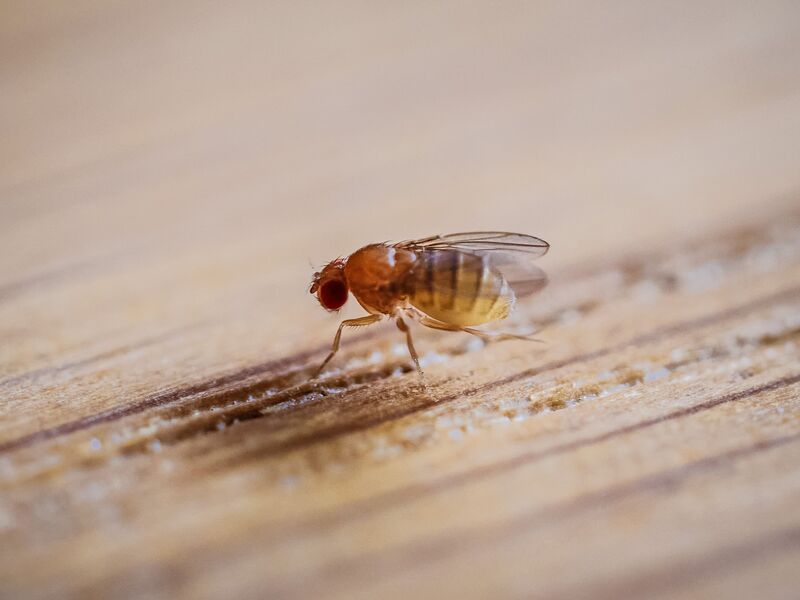
How to get rid of fruit flies? Fruit flies can appear in a clean-looking kitchen almost overnight. A few adults hovering near a fruit bowl may quickly turn into a larger infestation because they reproduce in moist, fermenting organic material that is easy to overlook.
1. Why Do I Suddenly Have So Many Fruit Flies?
Tthe answer is usually a hidden food source combined with the insect’s short life cycle. Their full life cycle can take only about eight to ten days under favorable conditions.
Overripe Fruit and Forgotten Produce
A bruised banana, soft peach, old potato, or forgotten onion may provide enough moisture and fermenting material for fruit flies to breed.
Check obvious locations such as fruit bowls, but also inspect under appliances, inside pantry baskets, behind storage containers, and beneath cabinets.
Food Residue in Trash and Recycling Bins
Trash cans, compost containers, and recycling bins commonly hold small amounts of juice, beer, wine, or food residue.
Even when bottles and cans appear empty, sugary liquid around rims and bottoms may attract adults.
Moisture and Organic Buildup in Drains
Fruit flies may gather around sinks when fermenting residue accumulates near a drain, garbage disposal, or overflow opening. However, several other small flies, including drain flies and phorid flies, can also appear near plumbing.
If activity remains concentrated around a drain after produce and trash have been addressed, clean the pipe mechanically to remove organic buildup. Pouring bleach or hot water down a drain may not remove the film in which small flies develop.
Fruit Flies Brought Home With Groceries
Adults or eggs may arrive with ripe or damaged produce. This does not necessarily mean the store or home is unsanitary; fruit flies naturally locate fermenting material quickly.
Inspect produce before storage. Remove bruised items, wipe leaking containers, and avoid leaving very ripe fruit at room temperature for several days.
2. What Kills the Most Fruit Flies in the House?
The most effective approach is not a single spray or scent. It is a combination of sanitation and trapping.
Continue inspecting the kitchen for fermenting produce, beverage residue, compost, and other materials where eggs and larvae may be developing.
Removing breeding material has the greatest long-term impact because it eliminates the food needed by larvae. An apple cider vinegar trap can then capture adults that are already flying around the room.
Commercial fruit fly traps can also work, but neither option will solve the infestation if fermenting food remains available elsewhere.
>>> Read more: How Long Can Food Last in Fridge Without Power? A Food Safety Guide
3. How to Get Rid of Fruit Flies?
A targeted cleanup is more effective than repeatedly swatting individual flies. Follow these steps:
- Remove ripe and spoiled produce: Refrigerate usable fruit and discard anything leaking, fermenting, or beginning to rot.
- Check hidden food sources: Look under appliances, inside pantry baskets, behind trash cans, and around pet feeding areas.
- Clean trash and compost containers: Wash the bottom, lid, rim, and surrounding floor.
- Rinse recycling: Clean beer bottles, wine bottles, juice containers, and cans before storage.
- Wipe kitchen surfaces: Remove syrup, juice, wine, crumbs, and sticky residue from counters and cabinet edges.
- Inspect drains and disposals: Scrub away organic buildup rather than relying only on bleach or boiling water.
- Set vinegar traps: Place them near the strongest activity, but away from uncovered food.
- Repeat inspections for several days:Newly emerged adults may continue appearing briefly after the original source is removed.
4. What Smells Make Fruit Flies Go Away?
There is no dependable household scent that permanently drives fruit flies away while a breeding source remains.
For this reason, scent-based remedies should be viewed only as a supporting measure, not as a substitute for removing food residue and breeding material.
Apple cider vinegar has the opposite effect: its fermenting odor attracts fruit flies, which is why it works as trap bait.
Eliminate fermentation odors from old produce, beverage residue, compost, and dirty bins instead of trying to cover them with another fragrance.
5. How Can You Prevent Fruit Flies From Coming Back?
Prevention is the final part because even a successful cleanup may provide only temporary relief if ripe produce, dirty recycling, or damp organic residue is allowed to accumulate again.
Refrigerate Ripe Fruit
Move ripe bananas, peaches, berries, tomatoes, and similar produce into the refrigerator when appropriate. Consume damaged fruit promptly rather than leaving it in a bowl.
Produce that must remain at room temperature should be checked daily.
Empty Trash and Compost Frequently
Do not allow food waste to accumulate for long periods, especially during warm weather. Empty indoor compost containers regularly and wash them whenever liquid or residue collects inside.
Rinse Recycling Before Storage
Rinse bottles, cans, jars, and beverage containers before placing them in an indoor recycling bin. Let them drain so standing liquid does not remain at the bottom.
Clean the recycling bin periodically, even when a liner is used.
Keep Counters, Sinks, and Drains Clean
Wipe spills as soon as they occur, including small amounts of fruit juice, soda, beer, and wine. Clean beneath countertop appliances and around the edges of sinks.
Keep mops, dishcloths, and sponges from remaining wet with food residue. If flies continue appearing near plumbing, inspect and scrub the drain thoroughly.
Check Produce Before Bringing It Inside
Examine fruit and vegetables for bruising, cracks, leaking juice, and soft areas. Separate damaged items from sound produce and use them first.
This habit does not guarantee that no fruit fly will enter the home, but it reduces the chance that groceries will provide an immediate breeding site.
>>> Read more: How Long Does Shrimp Last in the Fridge? Safe Storage for Raw and Cooked Shrimp
6. Final Thoughts
How to get rid of fruit flies? The key is removing the source rather than killing only the adults. Overripe produce, recycling residue, compost, trash-bin leaks, forgotten food, and organic buildup near drains are the most common places to investigate.
Once these sources have been removed, traps can help complete the process and make it more effective over the following days.