
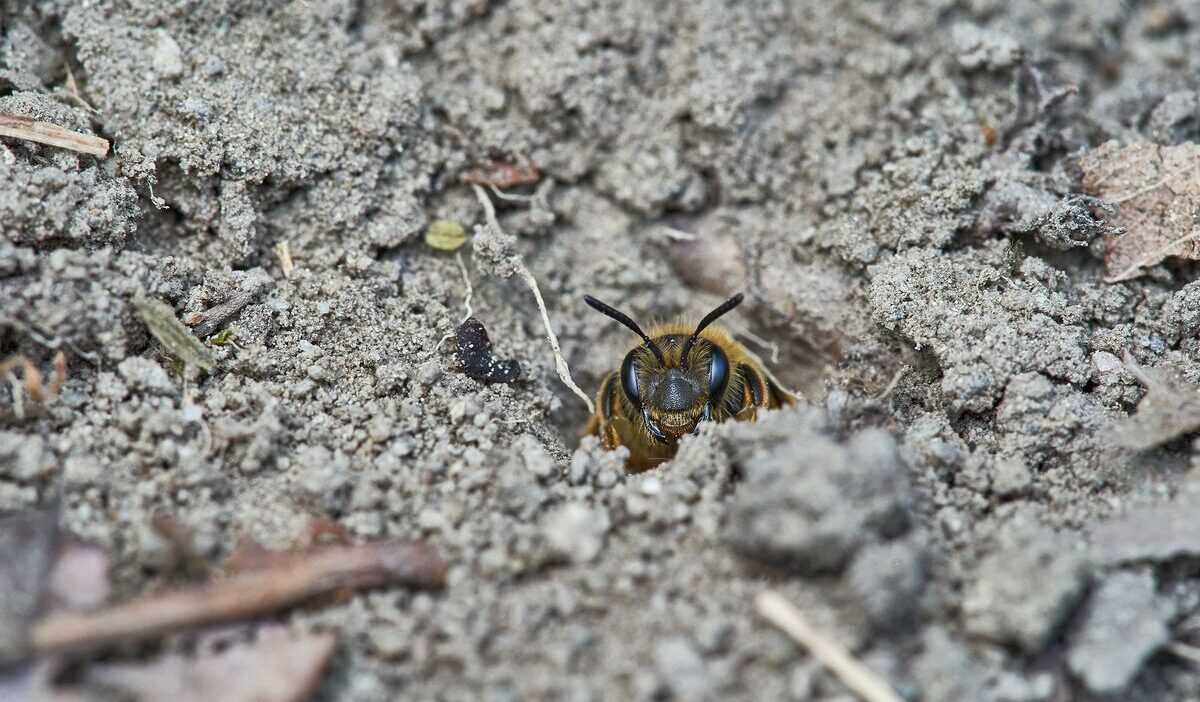
Small holes appearing across a lawn can look alarming, especially when bees begin flying low over the grass. But not every ground-nesting bee is dangerous, and many are useful native pollinators that only stay active for a short period.
That distinction matters before deciding how to get rid of ground bees. Mining bees, sweat bees, yellow jackets, and cicada killers can all use soil, but they behave very differently.
1. How to Identify Ground Bees vs Wasps?
The first step is to watch the insects from a safe distance. Focus on body shape, nest activity, and whether they are entering many small holes or one shared opening.
Ground Bees (Mining Bees, Sweat Bees)
Most solitary ground-nesting bees are small to medium-sized and use individual burrows rather than a large communal colony.
Mining bees often create loose clusters of pencil-sized holes surrounded by small piles of excavated soil.
Females usually build and provision their own nests, although many nests may occur close together when soil conditions are favorable. These bees are generally active for only a few weeks in spring, then disappear for the rest of the year.
Sweat bees vary widely in color and size but can also nest in soil. Most are not aggressive around the nest unless handled directly.
Yellow Jackets & Cicada Killers
Yellow jackets are social wasps, not bees. They often use a single underground entrance leading to a colony that can contain many workers. Their behavior is more defensive around the nest, especially later in the season.
Cicada killers are much larger, usually around 1.5 inches long, and create noticeable soil burrows. Despite their intimidating appearance, males cannot sting, while females are generally nonaggressive unless handled or stepped on.
2. What Draws Ground Bees to Lawns?
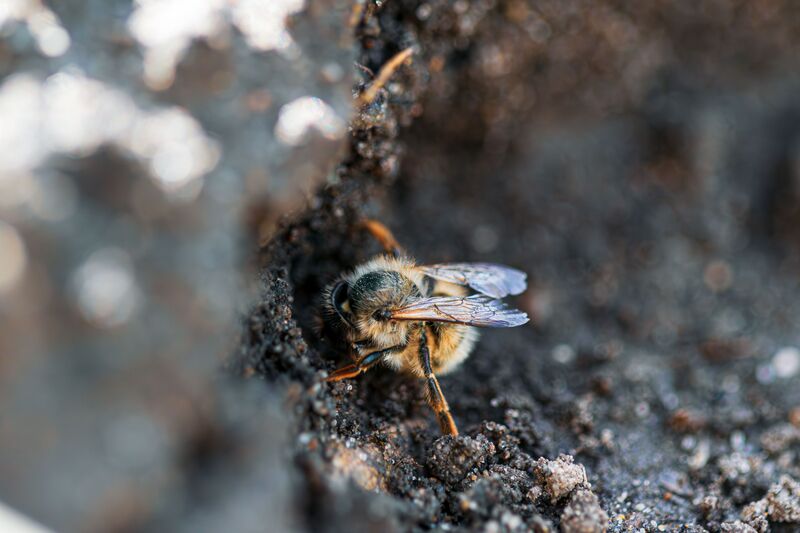
Ground-nesting bees prefer soil that is easy to excavate. Common conditions include:
- Thin or sparse turf
- Bare patches of soil
- Dry, well-drained ground
- Sunny areas
- Sandy or loose soil
- Slopes and edges with little plant cover
Mining bees often choose dry, exposed soil because compact, waterlogged ground is harder to excavate.
Sparse turf is another major factor. When grass cover is thin, bees have easy access to bare soil and can create individual burrows without pushing through dense roots.
>>> Read more: How to Get Rid of Carpenter Bees Without Worsening the Problem
3. How to Get Rid of Ground Bees?
If the insects are confirmed to be solitary ground bees, start with habitat changes rather than pesticides.
The simplest method is to make the area less suitable for nesting. Water dry patches consistently for a short period if the turf can tolerate it. Moist soil is less attractive for many solitary bees that prefer dry, loose conditions.
Avoid flooding active nests aggressively; the goal is to change the site gradually, not drown insects underground. Then repair bare areas by:
- Lightly loosening the soil after bee activity ends.
- Adding suitable topsoil if needed.
- Reseeding thin turf.
- Keeping new grass evenly moist while it establishes.
- Maintaining a thicker lawn going forward.
Dense grass creates a physical barrier and makes the site less attractive for nesting the following season.
If the insects turn out to be yellow jackets rather than solitary bees, the situation changes. Yellow jacket nests can be defensive and may require professional treatment, especially near entrances, children’s play areas, or frequently used parts of the yard.
4. Is Removing Ground Bees Necessary?
Often, no. Most solitary ground bees are valuable pollinators and pose little risk when left undisturbed.
Their active period is usually short, and the nest holes do not normally cause meaningful lawn damage. Leaving them alone is usually the best option when:
- Nests are away from doors and pathways
- No one in the household has a serious sting allergy
- The bees are not behaving defensively
- Turf damage is minimal
- Activity is seasonal and temporary
Intervention becomes more reasonable when the nesting area overlaps with heavy foot traffic or when species identification suggests a defensive wasp rather than a solitary bee.
>>> Read more: How to Get Rid of Bees Safely Around Your Home and Yard
5. FAQs
Ground bees are generally non-aggressive pollinators, but when their numbers get out of hand, knowing how to get rid of ground bees humanely can help restore peace to your outdoor space.
Are Ground Bees Aggressive if I Get Close to a Nest?
Most solitary ground bees are not highly aggressive. Females can sting if handled or trapped against the skin, but they do not usually defend nesting areas the way yellow jackets do. Males may fly around people but cannot sting.
How Long Does a Ground Bee Season Usually Last?
For many mining bee species, visible activity lasts only a few weeks in spring. Adults emerge, mate, build nests, provision brood cells, and then largely disappear from view. The next generation develops underground and emerges during a later season.
Will Planting Flowers Attract More Ground Bees?
Flowers can attract adult bees looking for nectar and pollen, but they do not automatically make a lawn suitable for ground nesting. Nest location depends more on soil texture, drainage, sun exposure, and bare ground.
Can I Fill in the Holes After the Bees Are Gone?
Yes. Wait until the seasonal activity has ended, then rake or lightly fill the holes and reseed bare areas. Avoid sealing active holes while females are still using them because that may trap developing brood or cause repeated excavation nearby.
6. Final Thoughts
Ground-nesting insects are easier to manage once you know what you are looking at. Solitary mining bees and sweat bees usually behave very differently from yellow jackets and cicada killers, even though all may use soil.
The most pollinator-friendly approach to how to get rid of ground bees is to make the lawn less attractive for future nesting rather than treating every burrow as a dangerous infestation.