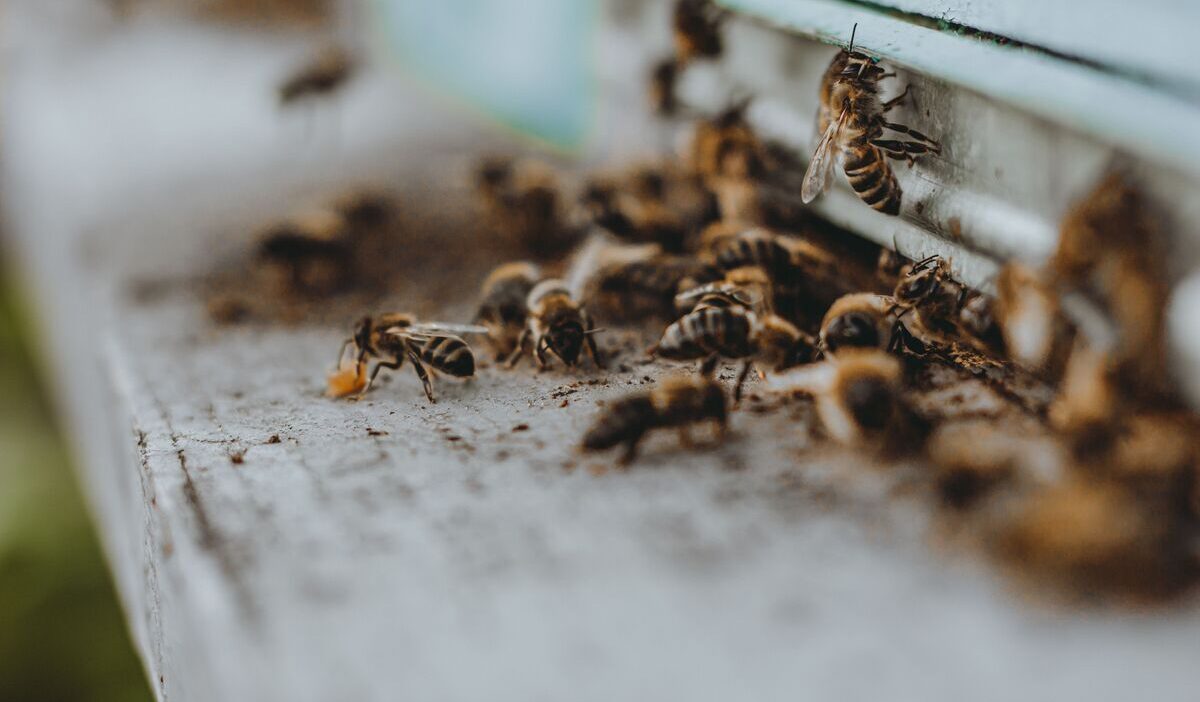
Seeing bees around a porch, lawn, deck, or wooden structure does not always mean there is a dangerous nest nearby. Many bees are solitary pollinators that rarely sting, while honey bees, bumble bees, carpenter bees, sweat bees, and ground-nesting species all behave differently.
The safest approach to how to get rid of bees is to identify the species first, decide whether the nest actually creates a risk, and use exclusion or habitat changes whenever possible.
1. Which Type of Bee Is Causing the Problem?
Correct identification is the first step in how to get rid of bees because treatment that makes sense for carpenter bees may be completely inappropriate for honey bees or ground-nesting species.
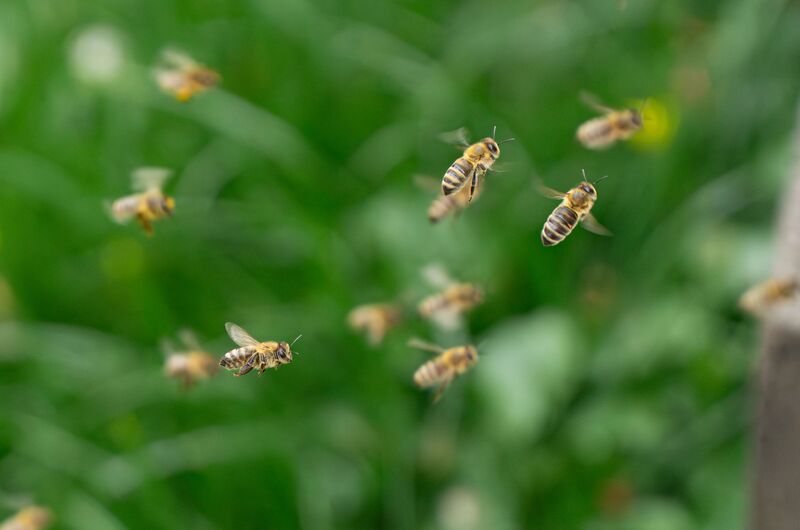
Honey bees are hairy, golden-brown insects that may form temporary swarms on branches or occasionally establish colonies inside wall cavities.
Bumble bees are larger and fuzzy and often nest underground or in protected cavities. Carpenter bees resemble bumble bees but usually have a shiny, relatively hairless abdomen and excavate round holes in wood.
Ground-nesting bees are extremely diverse. University of Minnesota Extension notes that about 80% of bee species nest in the ground, while only a smaller proportion use wood, hollow stems, or other cavities.
2. How to Get Rid of Bees Safely
Bees foraging on flowers usually do not need treatment. A nest next to a doorway, inside a wall, or in wood that is being damaged may require action.
How Do I Get Rid of Bees on My Porch?
If bees are simply visiting flowers around the porch, moving attractive potted plants farther from doors and seating may reduce contact.
Avoid leaving sugary drinks or food uncovered, and keep children and pets away from areas with frequent bee activity.
If bees repeatedly enter a crack, soffit, wall void, or roof gap, do not seal the opening until the species and nest status are known.
Honey bees established inside a wall may have a large colony and extensive comb, and sealing them in can force bees into the living space.
Get Rid of Ground Bees
For how to get rid of ground bees, first determine whether the bees are actually creating a safety problem. Many ground-nesting bees are solitary, beneficial, and active for only a limited period.
If nests are in a low-traffic lawn area, leaving them alone is often the easiest option. Where nests are close to walkways, play areas, or doors, changing the habitat after nesting activity ends can make the location less attractive.
Ground-nesting bees generally favor exposed soil, so maintaining denser turf or covering bare areas may reduce future nesting in that exact location.
Get Rid of Sweat Bees
The safest approach to how to get rid of sweat bees is usually reducing direct contact rather than trying to eliminate them from the property.
Sweat bees may be attracted to perspiration on hot summer days. Penn State Extension notes that they may land on people to drink sweat and can sting when trapped against the skin, although their stings are usually mild.
Get Rid of Wood Bees
“Wood bees” usually refers to carpenter bees. For how to get rid of wood bees, inspect eaves, railings, fascia, decks, and unfinished lumber for nearly round holes about 1/2 inch across.
Carpenter bees excavate tunnels but do not eat the wood. Reused tunnels may become larger over several seasons.
>>> Read more: How to Get Rid of Roaches at Home: Eliminate the Source of an Infestation
3. What Will Keep Bees Away?
What will keep bees away? There is no single repellent that works reliably for every species. The most effective approach is to remove or modify the specific feature attracting the bees.
For carpenter bees, painted or properly finished wood is less attractive than bare lumber. For bees nesting in soil, changing exposed ground conditions after the nesting season may discourage reuse.
For bees gathering near doorways, moving flowering containers or other attractants farther from high-traffic areas can reduce contact.
4. Can Vinegar Kill Bees?
Yes, concentrated vinegar contacting an insect may harm or kill it, but that does not make vinegar a recommended bee-control method.
Can vinegar kill bees? Possibly, but spraying vinegar around flowers, nests, soil, or structures can harm beneficial pollinators without solving the underlying nesting problem. Vinegar should therefore not be treated as a safe universal solution for how to get rid of bees.
Strong scents such as peppermint, citrus, clove, vinegar, or essential oils are frequently promoted online as bee repellents.
However, the authoritative extension sources reviewed do not establish any one household smell as a dependable way to remove an established bee nest.
5. When Should You Call a Beekeeper or Pest Control Professional?
Professional help is appropriate when identification is uncertain, the nest is inside a wall or roof, the bees are highly active near people, someone in the household has a serious sting allergy, or the nest cannot be reached safely.
For a temporary honey bee swarm resting on a branch or shrub, an experienced beekeeper may be willing to collect and relocate it.
For carpenter bees, inaccessible wood damage or repeated nesting may justify professional pest control. Ground-nesting bees should also be identified before chemical treatment because many native species are beneficial and relatively nonaggressive.
>>> Read more: How to Get Rid of Carpenter Bees Without Worsening the Problem
6. Final Thoughts
The best answer to how to get rid of bees depends on which bee is present and whether it is actually causing a problem. Honey bees, carpenter bees, sweat bees, and ground-nesting bees have different nesting habits and should not be treated as one pest.