House flies can multiply quickly when they find moist garbage, animal waste, food residue, or other decaying organic material. Killing the adults may make a room feel cleaner for a short time, but the infestation can continue if eggs, larvae, or pupae are still developing nearby.
The most effective approach to how to get rid of house flies is to break the breeding cycle. That means confirming that the insects are actually house flies, removing the adults already indoors, finding the material where larvae are developing, cleaning that source thoroughly, and blocking new flies from entering.
1. How Do You Know If You Have House Flies vs. Other Pest Flies?
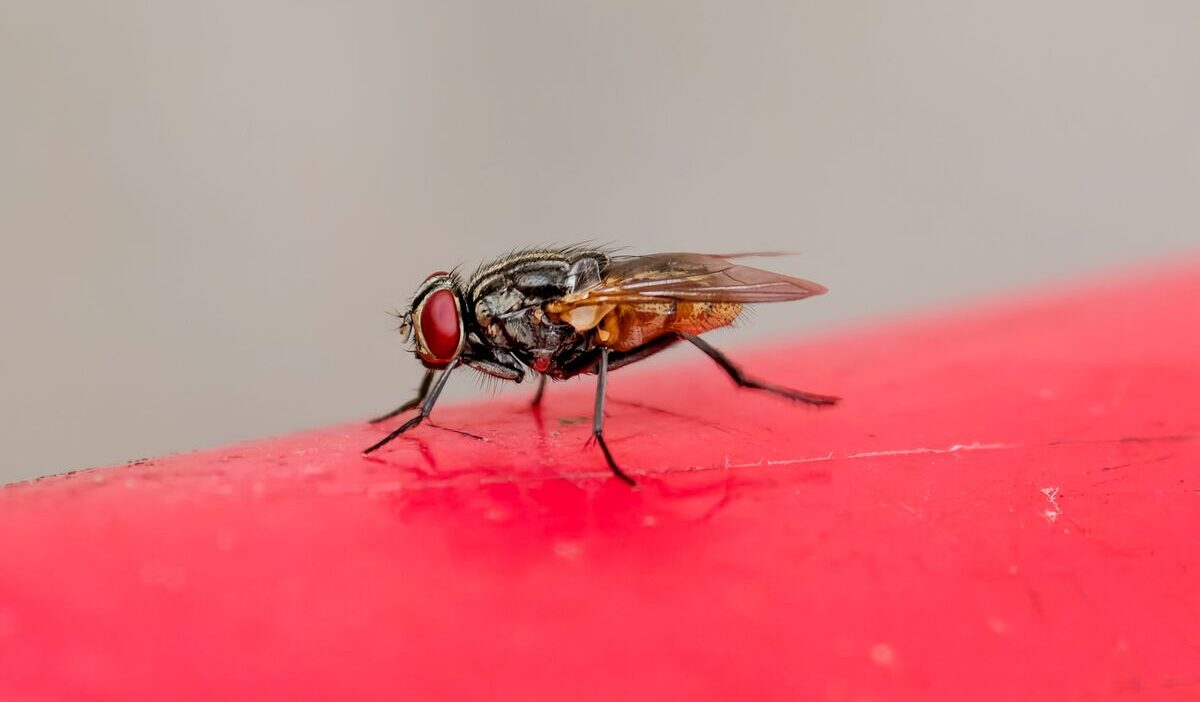
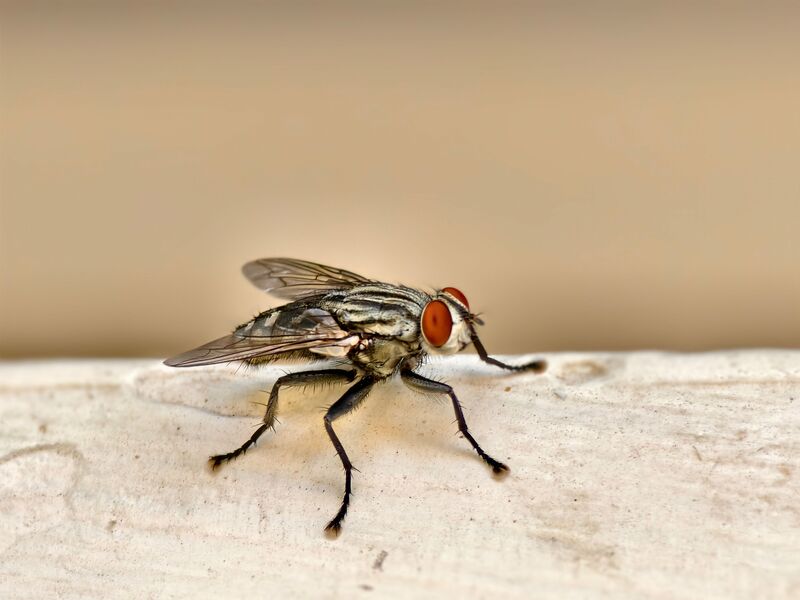
House flies are medium-sized gray flies with four darker stripes across the thorax. They are usually around 6–7 mm long, although size varies. Their mouthparts are designed for sponging liquid food rather than biting.
They are commonly found around garbage, manure, food waste, and other moist organic material. If large metallic blue or green flies suddenly appear, blow flies may be more likely.
Correct identification matters because the breeding source changes with the species. For house flies, the strongest clues are repeated activity around trash, pet or livestock waste, food residue, or damp decomposing material.
House flies reproduce quickly. A female may lay up to 500 eggs over several batches, usually around 75–150 eggs at a time, and warm-weather eggs can hatch within only 8–20 hours.
2. How to Get Rid of House Flies
Before starting treatment, make sure the insects match house fly behavior and appearance. If the flies are actually developing in fruit, drains, or a dead animal, a house-fly control plan may miss the real source.
Step 1: Remove the Flies Already Inside
A fly swatter, vacuum, sticky flypaper, or appropriately placed light trap can reduce adults quickly.
For a small number of flies, physical removal is often enough. Sticky flypaper can also help identify areas with heavier activity. Screens and simple physical controls are preferred before broad indoor spraying when practical.
Vacuum flies resting around windows, ceilings, or curtains, then empty the vacuum outside. Avoid relying on aerosol sprays as the main answer to how to get rid of house flies, because killing adults does not stop larvae developing elsewhere.
Step 2: Find What They Are Breeding In
House fly larvae need moist, nutrient-rich organic material. Check these:
- Indoor and outdoor garbage cans
- Leaking trash bags
- Pet waste or animal bedding
- Compost
- Food beneath appliances
- Rotting plant material
- Dirty mop buckets
- Grease or food buildup around waste areas
Do not inspect only the room where adult flies gather. Mature maggots can crawl as far as 50 feet away from breeding material before finding a dry place to pupate.
Step 3: Remove and Clean the Source
Bag spoiled or contaminated material tightly and move it outside.
Then wash the surrounding surface thoroughly. Trash cans need more than a new liner: scrub the lid, rim, handles, interior, base, and the ground beneath them.
Remove grease, crumbs, animal waste, and wet organic buildup. Sanitation is the most important long-term control because house flies cannot maintain the same breeding cycle without suitable larval habitat.
Step 4: Stop More Flies From Entering
Repair torn screens, close gaps around windows and doors, and keep exterior doors closed when practical.
Screens with roughly 14–16 mesh openings per inch can help exclude house flies.
Outdoor garbage should have tight-fitting lids and be positioned as far from entrances as practical. Animal manure, rotting mulch, grass clippings, and dead wildlife should also be removed promptly.
3. How to Find the Breeding Source?
When the source is not obvious, work backward from the areas with the highest fly activity.
Pay attention to larvae as well as adults. House fly maggots are creamy white and may reach around 7–12 mm long when fully grown. At optimal temperatures, larval development may take approximately 4–13 days.
Their need for moisture provides another clue. Eggs must remain moist to hatch, and high-moisture manure strongly favors larval survival.
So when working on how to get rid of house flies, prioritize damp organic material over clean, dry surfaces that merely happen to have adult flies resting nearby.
>>> Read more: Too Many Flies Indoors? How to Get Rid of Flies Fast and Safely
4. Which House Fly Traps Are Worth Using?
Traps can reduce adults, but none should replace sanitation.
| Trap Type | Best Use | Main Limitation |
|---|---|---|
| Sticky flypaper | Small to moderate indoor activity | Does not affect larvae |
| Window sticky traps | Flies gathering at windows | Limited trapping area |
| UV light traps | Utility or service areas | Placement strongly affects performance |
| Baited outdoor traps | Reducing adults near waste areas | May attract more flies toward the placement zone |
| Vacuum or swatter | Immediate removal | Labor-intensive for large infestations |
Sticky traps are practical for small indoor populations, while outdoor traps should be kept away from doors, patios, and food areas so the attractant does not pull flies toward people.
5. How Do You Cut Off House Fly Food Sources and Moisture?
House flies need access to moist organic material to reproduce, so food and water management are central to how to get rid of house flies.
Keep waste in lined cans with tight lids. Remove garbage frequently and clean any liquid that leaks underneath. Store food in sealed containers and wipe counters, tables, floors, and cooking equipment promptly.
Moisture matters as much as food. Fix dripping faucets, leaking pipes, outdoor drainage problems, and wet animal bedding. Remove standing water and keep waste areas as dry as practical. A useful routine is to focus on four zones:
- Kitchen: clean food spills, grease, and trash.
- Pet areas: remove feces and uneaten food daily.
- Outdoor waste: keep lids secure and cans clean.
- Yard: remove manure, rotting clippings, dead animals, and decaying vegetation.
Removing food, water, and shelter is a core integrated pest management principle because it makes an environment less capable of supporting pest reproduction.
>>> Read more: How to Get Rid of Flies in House by Finding What Brings Them Inside
6. Final Thoughts
The most reliable approach to how to get rid of house flies is to break the life cycle rather than concentrating only on the adults.
Because eggs may hatch in as little as 8–20 hours and females can lay hundreds of eggs, small sanitation problems can become noticeable quickly. Early source removal is therefore the most important step for keeping another generation from appearing.