Spider mites are tiny sap-feeding pests that can multiply quickly on indoor plants, especially when conditions are warm and dry.
The best approach to how to get rid of spider mites is to catch the infestation early, isolate affected plants, and match the treatment to the severity of the problem.
Light infestations may respond to rinsing and pruning, while heavier populations often require repeated insecticidal soap or horticultural oil treatments.
1. How to Spot a Spider Mite Infestation Early
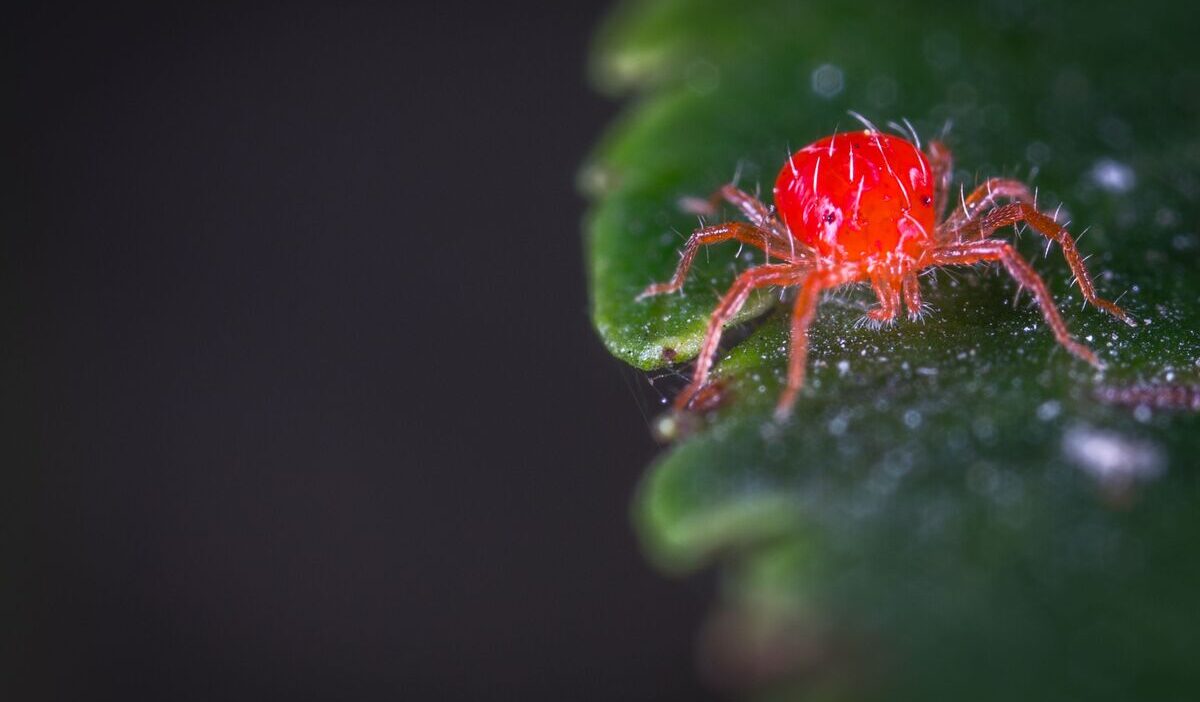
Because adults are only about 1/50 inch long, infestations are often noticed only after leaves develop pale speckling, yellowing, or fine webbing.
Early detection makes how to get rid of spider mites much easier because small populations are easier to remove before they spread across multiple plants.
Look for several clues rather than waiting for obvious webs.
Look for Speckled or Discolored Leaves
Spider mites pierce plant cells and remove their contents, creating tiny pale dots known as stippling. As feeding continues, leaves may become yellow, bronze, grayish, or dry around the edges.
Heavy infestations can lead to premature leaf drop and serious plant decline. If one plant suddenly looks dull or faded while nearby plants remain healthy, inspect it closely before assuming the problem is watering or fertilizer.
Check the Undersides of Leaves
Spider mites commonly gather on leaf undersides, where they are less exposed to disturbance.
Use a magnifying glass and look along veins and stems for tiny moving dots. Depending on the species and life stage, mites may appear greenish, yellow, reddish, or nearly transparent.
Eggs are usually tiny and round and may be clustered near veins or webbing. Because mites are so small, direct inspection is easier in bright light.
Try the White Paper Test
Hold a sheet of white paper beneath a suspicious leaf and tap the foliage sharply. If tiny specks fall onto the paper and begin crawling, spider mites may be present.
Look for Fine Webbing
Fine silk around leaf joints, stems, or between leaves is a strong sign of a more established infestation.
Not all early spider mite infestations produce visible webbing, so its absence does not rule them out. Once webs become dense, the population may already be large enough to require repeated treatment.
2. How to Get Rid of Spider Mites: Choose the Treatment Based on the Infestation
A one-size-fits-all treatment is rarely necessary. The most practical how to get rid of spider mites plan depends on how many leaves are affected, whether webbing is present, and whether mites have spread to other plants.
Light Infestation
For a small infestation on a few leaves, start with physical removal.
Take the plant to a sink or shower and rinse the foliage thoroughly, focusing on the undersides of leaves. A strong stream of water can knock mites and eggs from the plant.
Remove individual leaves that are heavily damaged if the plant can tolerate pruning. After rinsing, isolate the plant and repeat the white paper test over the next several days.
Moderate Infestation
When mites appear on several leaves or keep returning after rinsing, insecticidal soap or horticultural oil may be appropriate.
These products work mainly by direct contact, so coverage matters. Spray both sides of leaves, stems, and growing tips according to the label.
Repeat applications are often needed because these treatments have little residual activity and may not kill every egg.
Test the product on a small section first, particularly on sensitive plants. Avoid treatment during very hot conditions or when the plant is wilted or drought-stressed.
Heavy Infestation
Dense webbing, widespread discoloration, heavy leaf loss, or mites on multiple plants indicates a serious infestation.
At this stage, isolate affected plants immediately. Remove severely damaged foliage and consider discarding plants that are heavily infested and unlikely to recover, especially when they threaten a larger indoor collection.
Horticultural oils or other products specifically labeled for spider mites may be needed. Some conventional insecticides are ineffective against mites and may even worsen outbreaks by killing predatory insects while leaving mites relatively unaffected.
>>> Read more: How to Get Rid of Spiders: Proven Ways to Keep Them Out of Your Home
3. How to Stop Spider Mites From Spreading to Other Plants
Prevention is a major part of how to get rid of spider mites because adults and eggs can move between plants through touching foliage, tools, clothing, or newly purchased plants.
The following habits reduce the chance of another outbreak.
Isolate New and Infested Plants
Move infested plants away from healthy ones as soon as mites are confirmed.
New houseplants should also be kept separate for a short observation period before joining the main collection.
Colorado State University Extension recommends isolating newly acquired plants for at least three weeks to help detect hidden pests before they spread.
Avoid allowing leaves from quarantined plants to touch established plants.
Inspect Leaves Regularly
Check the undersides of leaves once a week, especially on plants that have experienced spider mites before.
Use the white paper test when foliage develops unexplained stippling. Early detection reduces the amount of pesticide or pruning that may be needed later.
Keep Plants Healthy
Provide the correct light, watering, and nutrition for each plant. Avoid severe drought stress, but do not overwater simply to raise humidity.
Spider mites often thrive in hot, dry conditions, so improving airflow and maintaining appropriate humidity for the plant can reduce stress.
Avoid excessive nitrogen fertilizer, which may encourage tender growth that is more attractive to some pests.
Clean the Growing Area
Wipe shelves, windowsills, plant stands, and nearby surfaces after treating an infestation.
Remove fallen leaves and dead plant material, and clean pruning tools before using them on another plant. Wash hands after handling heavily infested foliage.
>>> Read more: How to Get Rid of Carpenter Ants Before Wood Damage Spreads
4. What Should You Avoid When Treating Spider Mites?
Several common mistakes can make the infestation harder to control.
| Mistake | Why It Causes Problems | Better Approach |
|---|---|---|
| Spraying only the top of leaves | Most mites remain underneath | Treat both leaf surfaces |
| Using one application only | Eggs or missed mites can survive | Repeat as directed on the label |
| Using broad-spectrum insecticides randomly | Some products kill predators but not mites | Use products specifically labeled for mites |
| Treating a drought-stressed plant | Oils and soaps may increase leaf injury | Water appropriately before treatment |
| Keeping infested plants beside healthy ones | Mites can spread rapidly | Isolate immediately |
| Using strong DIY detergent mixtures | Household soaps may burn foliage | Use labeled insecticidal soap |
| Ignoring damaged leaves | Heavy colonies can remain protected in webbing | Prune badly infested foliage |
5. Final Thoughts
The most reliable answer to how to get rid of spider mites is to detect them early and match the treatment to the infestation.
For light activity, rinse the plant and remove damaged leaves. For moderate infestations, use properly labeled insecticidal soap or horticultural oil with thorough coverage and repeat treatment. For severe cases, aggressive isolation and removal of heavily infested plants may be necessary.