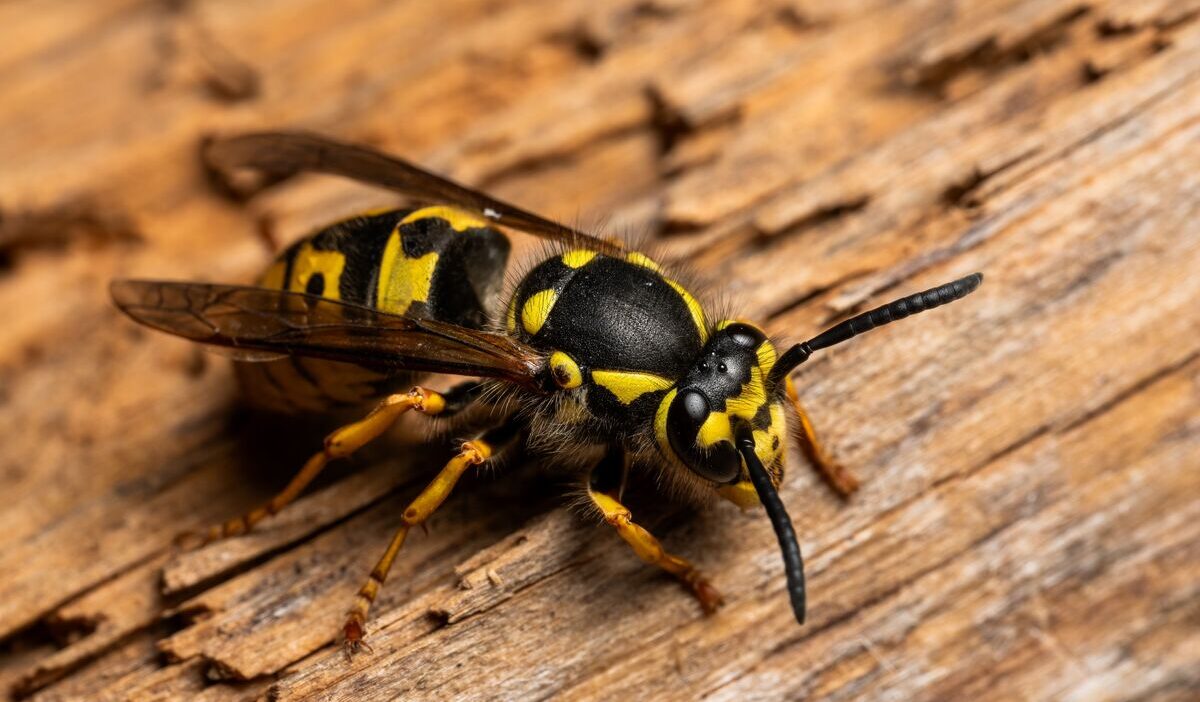
Yellow jackets can become a serious problem when they build nests near lawns, doorways, decks, sheds, or wall cavities. Unlike many solitary wasps, they live in colonies and can sting repeatedly when defending the nest. Their numbers are often highest in late summer, when outdoor food and drink can also attract foraging workers.
The safest approach to how to get rid of yellow jackets is to locate the nest, assess how close it is to people, and use targeted control instead of spraying random workers. Hidden nests, large colonies, and nests near high-traffic areas are usually best handled by a pest-control professional.
1. Where Do Yellow Jackets Usually Build Nests?
Yellow jackets do not all nest in the same place. Some species use underground cavities, while others choose walls, attics, hollow logs, or sheltered spaces around buildings.
Knowing the nest location is essential before deciding how to get rid of yellow jackets, because treatment that works for a ground nest may be unsafe or ineffective inside a wall.
Underground Nests
Many yellow jackets build colonies in abandoned rodent burrows or other cavities beneath the soil. The entrance may look like a simple hole in the lawn, garden, or landscape bed with workers repeatedly flying in and out.
Wall Voids and Attics
Yellow jackets may also establish nests inside wall cavities, attics, concrete blocks, and similar protected spaces. These colonies are more difficult to treat because the visible opening may be some distance from the actual nest.
Do not immediately seal the exterior hole while the colony is active. Blocking the usual route may force wasps to search for another exit, including one that leads into the living area.
Eaves, Sheds, and Outdoor Structures
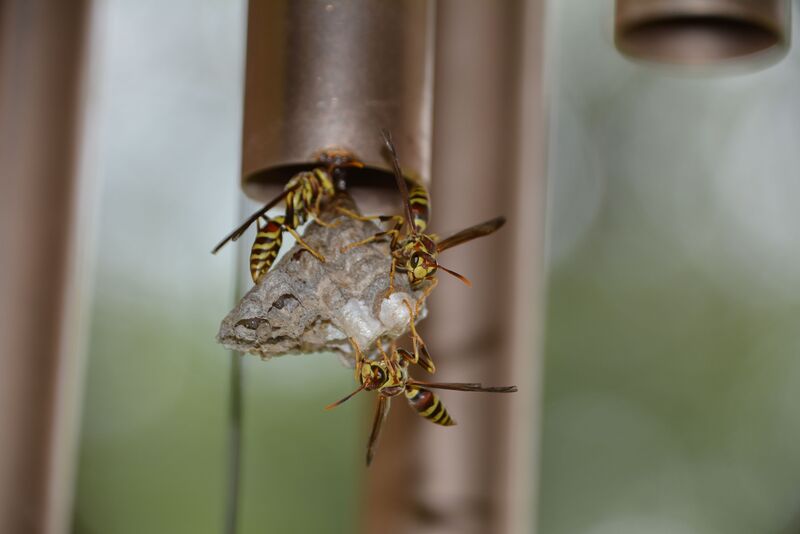
Some yellow jacket relatives and aerial species build exposed paper nests in trees or beneath eaves and other protected parts of buildings. Yellow jackets can also use enclosed spaces around sheds, decks, porches, or landscape structures.
Repeated flight to one exact location is usually a stronger indicator of a nest than wasps simply feeding around flowers or outdoor meals.
2. How to Get Rid of Yellow Jackets
The best method for how to get rid of yellow jackets depends on where the colony is located and whether it can be approached without placing people at unnecessary risk.
Targeted Nest Treatment
Treating the actual nest is far more effective than spraying individual yellow jackets flying around the property.
For visible or ground nests, use only a pesticide specifically labeled for yellow jackets or wasps and for that exact application site.
Treatment is generally safer during late evening or early morning when worker activity is lower and more of the colony is inside.
Ground nests may be treated with appropriately labeled dust or other nest products. Dust can be useful because workers moving through the entrance carry particles deeper into the colony.
Simply pouring liquid into a hole may not reach a nest positioned farther inside the burrow.
Never use gasoline, fire, bleach, or improvised household chemicals. If pesticide treatment is chosen, follow the label exactly and keep children and pets away from the area.
Yellow Jacket Traps
Traps can reduce some foraging workers, particularly around patios, outdoor dining spaces, and garbage areas, but they should not be treated as a complete solution.
Place traps away from doors, seating areas, and food preparation zones so the attractant does not draw more yellow jackets toward people.
Traps generally capture only part of the population and will not eliminate a mature colony by themselves.
Professional Removal
Professional help is the safer choice when the nest is inside a wall, attic, roof cavity, or another difficult-to-access location.
Hidden yellow jacket nests can be particularly risky because inappropriate aerosol treatment may cause workers to seek another exit into the home.
A licensed pest-control professional has the protective equipment and application tools needed to reach the colony more accurately.
Professional treatment is also strongly recommended when someone in the household has a known severe allergy to insect stings.
>>> Read more: How to Get Rid of Earwigs: What Attracts Them and How to Stop
3. How to Keep Yellow Jackets Away From Your Yard
Preventing food attraction is an important, especially during late summer when workers become more interested in sugary drinks, meat, ripe fruit, and outdoor garbage.
There are no highly reliable repellents that simply keep yellow jackets away from an entire property.
Reducing access to food and shelter is more dependable than relying on fragrances, ultrasonic devices, or broad pesticide spraying.
When structural openings are discovered, seal them during the off-season or after confirming that no active colony remains. Prevention is easier than treating a large colony later in the summer.
>>> Read more: How to Get Rid of Aphids on Plants and Keep Them From Coming Back
4. FAQs
What Time of Day Are Yellow Jackets Least Active?
Yellow jackets are generally less active during late evening and early morning, which is why nest treatment is commonly recommended during those periods.
Will Yellow Jackets Leave a Nest on Their Own?
A colony does not usually relocate simply because people avoid it. However, yellow jacket colonies are generally annual.
How Long Does a Yellow Jacket Nest Last?
Most colonies last for one season. A queen begins a new nest in spring, worker numbers increase through summer, and the colony reaches its largest size in late summer or fall.
Can Yellow Jackets Build Nests Inside Walls?
Yes. Yellow jackets can establish colonies in wall voids, attics, concrete blocks, and other structural cavities.
5. Final Thoughts
The safest answer to how to get rid of yellow jackets is to identify the nest location and target the colony rather than chasing individual workers.
Ground nests can sometimes be treated with appropriately labeled products, while traps can reduce nuisance activity around outdoor spaces. Hidden nests inside walls and attics are more difficult and generally warrant professional removal.